If you’ve ever held a small, precision-engineered part like a car door latch component, a laptop hinge, or a medical device connector, chances are it came from a zinc die casting. For over a decade, my team has operated as a zinc die casting supplier, working with clients across automotive, electronics, and medical industries—each of whom tells me the same thing: when they source zinc die cast parts, they don’t just want a part that fits. They want a part that doesn’t fail mid-production, doesn’t corrode when exposed to the elements, and meets every tiny specification on their 50-page engineering drawings. That’s where our quality control (QC) process comes in. It’s not a single step at the end of the line—it’s a thread woven through every stage of production, and it’s the reason our clients come back year after year. I’ve seen too many die casting companies cut corners on QC, only to send out parts that get rejected at final assembly. So today, I want to pull back the curtain on exactly what our zinc die casting QC process looks like, from the moment a client’s order lands in our inbox to the day parts ship to their door. Zinc Die Casting
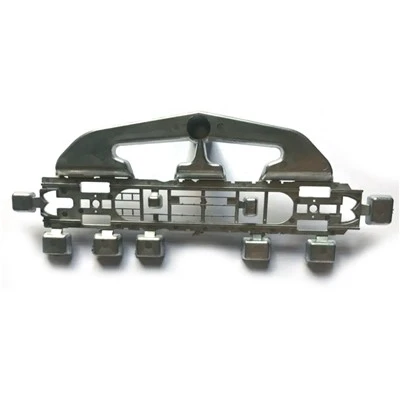
Let’s start before we even fire up a single die casting machine: incoming material inspection. Zinc die casting relies on high-grade zinc alloy ingots—most commonly Zamak 3, Zamak 5, or Zamak 7, depending on the client’s needs. The quality of the final part is only as good as the zinc we melt, so we don’t take raw material at face value. Every batch of ingots that arrives at our facility gets a full check before it’s stored or melted. First, we verify the material certification from the supplier. That document should list the exact chemical composition: zinc, plus small amounts of aluminum, magnesium, and copper, with strict limits on impurities like lead, cadmium, and iron. Impurities in zinc can cause all kinds of problems later—porosity, inconsistent strength, or even surface defects that make parts unusable. For example, too much iron in Zamak can lead to “sticking” in the die during casting, ruining parts and wearing out our molds faster. So we pull a small sample from every batch and run it through a spectrometer to cross-reference the chemical composition with the certification. If anything is off, the entire batch gets sent back—no exceptions. We once had a shipment from a supplier that listed lead levels 10 times the allowed limit for medical-grade Zamak 3; we caught it before it even hit the melting pot, and that saved us from reworking thousands of parts later. That’s the kind of early inspection that prevents costly mistakes.
Next up, die preparation and pre-production checks. The dies we use for zinc die casting are precision-machined to tolerances of 0.001 inches—smaller than the thickness of a human hair. Before we start a production run, our die technicians don’t just swap out the old die for a new one; they perform a 20-point inspection checklist. They measure the die’s cavity dimensions to make sure they match the client’s CAD files, check for any micro-cracks or wear marks on the die surface that could transfer to parts, and verify that the ejector pins are aligned correctly. Ejector pins are what push the finished part out of the die, and if they’re misaligned, they can leave scuff marks or deform the part. We also test the die’s cooling system—zinc solidifies quickly when it hits the die, and uneven cooling can cause warping or internal porosity. We use thermal imaging cameras to scan the die surface, looking for hot spots that would slow solidification in some areas and create defects. Once the die passes inspection, we run a 10-shot trial. Those first 10 parts aren’t for sale—they’re test pieces. We check their weight, which is a quick indicator of whether the cavity is filling properly, and we do a visual scan for any obvious defects like flash (excess metal that seeps out of the die) or cold shuts (where two streams of molten metal don’t fuse together). If the trial parts pass, we log all the data—die temperature, melt temperature, injection pressure, and cycle time—and lock that in for the production run. Changing those parameters mid-run would risk inconsistent quality, so we only adjust them if we catch a problem during production.
Now, the heart of the process: in-process QC during production. Zinc die casting runs fast—some of our machines produce a part every 15 seconds, so we can’t stop every part to inspect it. Instead, we use a combination of automated checks and scheduled human inspections to catch problems early. First, our casting machines are fitted with built-in sensors that track every parameter: melt temperature, injection speed, clamping force, and die temperature. If any of these fall outside the pre-set limits, the machine automatically stops and alerts our QC team. For example, if the melt temperature drops too low, the molten zinc won’t flow smoothly into the die cavity, leading to incomplete parts. Those sensors catch that before a bad part is even formed. We also use sampling checks: every hour, we pull 5 to 10 parts from the line and bring them to our on-site metrology lab. In the lab, our QC technicians use digital calipers, micrometers, and coordinate measuring machines (CMMs) to check critical dimensions. CMMs are particularly important for complex parts, like a laptop hinge with multiple small holes that need to align perfectly with another component. A CMM can measure hundreds of points on a single part in minutes, comparing every dimension to the client’s drawing and flagging any that are out of spec. We also do visual inspections here, using magnifying glasses and sometimes digital microscopes, to look for surface defects like porosity, sink marks, or discoloration. Sink marks are small dents on the surface of a part that form when thick sections of metal solidify and shrink—they’re not just cosmetic; they can weaken the part or make it impossible to finish.
Once parts are cast and trimmed (we trim off the excess flash and runners, which are the channels that feed metal into the die), we move on to secondary processing, and that’s another big QC checkpoint. Most zinc die cast parts need some form of finishing: plating, painting, powder coating, or machining. Each of these steps adds its own quality requirements, so we inspect parts before they go into secondary processing and again after they come out. For example, if a part has hidden porosity from the casting stage, plating will pull that porosity to the surface, causing blisters or uneven coating. So before plating, we do a leak test for parts that need to be air-tight or liquid-tight—like a car fuel pump component. We submerge parts in water with a small amount of dye, then pressurize the inside; if air escapes, the dye will show a leak spot, and we scrap or rework that part. For parts that get machined—like a medical device screw boss—we check the surface of the machined area for burrs or tool marks that could affect fit or function. We once had a client send us parts that failed at their assembly line because a machining burr cut through a wire harness; we adjusted our in-process inspection to check for burrs before shipping, and that problem was eliminated.
Finally, before parts leave our facility, we do a final, 100% visual inspection for cosmetic defects, and a random sampling of parts goes for full performance testing. Performance testing varies by client and application: for automotive parts, we might do a salt spray test to check corrosion resistance; for electronics parts, we test electrical conductivity; for medical parts, we run biocompatibility screenings. Salt spray testing is a common one for outdoor zinc parts—we spray parts with a salt solution for hundreds of hours and then check for rust or coating degradation. We once worked with a marine equipment client who required parts to survive 1,000 hours of salt spray; our QC team ran that test on every new batch of Zamak 7 parts we produced, and only shipped parts that passed with zero rust spots. We also keep a small sample of every production batch for at least two years, so if a client has a quality issue down the line, we can pull the sample, test it, and trace the problem back to the batch—whether it’s a material issue, a machine issue, or something else entirely.
Wait, I should be clear about one thing: our QC process isn’t about being perfect. No manufacturing process is, and when you’re working with metal that melts at over 700 degrees Fahrenheit, there will always be a small number of defective parts. But our goal is to keep that number below 0.5% for every production run. That’s why we don’t just rely on technology—our QC team has over 20 years of combined experience in zinc die casting, and they know what a good part looks like. They can spot a tiny porosity spot or a slight dimensional variation that a machine might miss. I’ve had technicians on our team who started as die casters and worked their way up to QC managers, and that hands-on experience makes all the difference. They understand how a small change in melt temperature or die alignment can affect the final part, so they know exactly what to look for during inspections.
As a zinc die casting supplier, I know that quality control is what separates a reliable partner from one that causes headaches. Our clients don’t want to deal with rejected parts, delayed shipments, or parts that fail in the field. That’s why we’ve built our QC process around transparency—we share all our inspection data with every client, so they can see exactly how many parts we tested, what dimensions we checked, and what results we got. We even offer to send third-party inspectors to our facility if a client wants to be on-site during production. We’ve had clients from across North America and Europe work with us, and almost all of them come back for repeat orders because they trust our process.

If you’re looking for a zinc die casting partner that prioritizes quality at every stage of production, we’re here to help. Whether you need small, custom parts for electronics, high-strength components for automotive applications, or precision parts for medical devices, our team has the expertise to deliver parts that meet your exact specifications. We offer custom die design, secondary processing, and flexible production runs to fit your project’s needs, and our QC process ensures that every part that leaves our facility is ready for your assembly line. To discuss your next zinc die casting project and get a quote tailored to your needs, reach out to our team today. We’re ready to turn your design into a high-quality, precision part.
Zinc Die Casting References
- Zamak Alloys: Properties, Processing, and Applications. Zinc Die Casting Association, 2021.
- Quality Control Standards for Die Casting. International Organization for Standardization, 2019.
- In-Process Inspection Techniques for Zinc Die Casting. Journal of Manufacturing Processes, vol. 45, 2020, pp. 123-132.
- Corrosion Resistance Testing for Zinc Die Cast Components. Automotive Engineering International, 2022, pp. 45-48.
Shenzhen Shunhaoda Technology Co., Ltd.
With abundant experience, we are one of the most professional zinc die casting manufacturers and suppliers in China. If you’re going to buy bulk high quality zinc die casting made in China, welcome to get free sample from our factory. Also, custom service is available.
Address: 902, Building A3, Tianrui Industrial Park, No. 35 Fuyuan 1st Road, Zhancheng Community, Fuhai Street, Bao’an District, Shenzhen
E-mail: sales@shdindustry.com
WebSite: https://www.shd-industry.com/
