If you’ve ever stood on a residential street and watched the soft hum of a pole mounted transformer powering your neighbor’s fridge, streetlights, and WiFi router, you might not realize how much that unassuming piece of hardware shapes the reliability of your daily life. As someone who’s been in the pole mounted transformer supply business for over a decade, I’ve worked with dozens of utility teams across North America that all circle back to the same frustration: a transformer that cuts out unexpectedly, dims lights during peak summer AC hours, or forces costly mid-season replacements because it can’t keep a steady voltage. Voltage regulation isn’t just a technical buzzword for us—it’s the thing that makes our product worth the trust utilities place in us. Over the years, I’ve learned that improving a pole mounted transformer’s regulation doesn’t require a full teardown or a complete overhaul. Most of the best solutions are rooted in small, targeted adjustments, proactive maintenance, and choosing the right design for the specific job. Let me walk you through what I’ve seen work, and what I recommend to every team that reaches out to us. Pole Mounted Transformer

First, let’s get clear on what voltage regulation actually means for pole mounted transformers. Unlike large substation transformers that feed whole cities, pole mounted units are smaller, closer to end users, and handle variable loads—think a neighborhood where half the houses run AC at 3 PM in July, then drop to half that load at 10 PM when everyone’s asleep. Regulation is the difference between the voltage at full load and no load, expressed as a percentage: the lower that percentage, the better the transformer is at keeping voltage consistent, so devices don’t get damaged from overvoltage or undervoltage. For example, a transformer with 2% regulation will deliver far steadier power than one with 5% regulation, especially during those peak load swings that push older units to their limit.
One of the most impactful, often overlooked, improvements we recommend for almost all our clients is upgrading to a load tap changer (LTC) that’s tailored to pole mounted applications. A lot of standard pole mounted transformers come with tap changers that require manual adjustments—techs have to climb the pole, turn a crank, and adjust taps based on load readings, which isn’t just time-consuming, it’s reactive, not proactive. That’s why we started offering on-load tap changers (OLTC) for our units about six years ago, and I haven’t had a utility client who switched go back to manual taps. Here’s why it works: an OLTC monitors real-time line voltage and load demand automatically, adjusting the transformer’s turns ratio in seconds to keep output voltage within the ±5% ANSI standard for residential loads. For a neighborhood with lots of electric heat or AC, where load can jump 30% in an hour, that automatic adjustment makes a huge difference. I remember a client in Phoenix who was dealing with 4-5 undervoltage calls a day during summer months after they switched their old transformers to our units with OLTCs. Within two months, those calls dropped to zero. The OLTC isn’t a one-size-fits-all part, though—we work directly with utilities to size it for their specific load profile, not just throw the largest unit on the pole. Oversized tap changers waste energy, so matching the LTC to the transformer’s kVA rating and typical load is key.
Next, let’s talk about core and coil design tweaks, which are the backbone of a pole mounted transformer’s regulation performance. A lot of older transformers use a single-phase core design with a simple coil arrangement that creates magnetic leakage—this leakage is the main reason voltage drops when load increases, right? When the transformer is carrying heavy current, the magnetic field isn’t perfectly contained, so some energy is lost, leading to lower output voltage. The fix here isn’t a new core entirely, it’s refining how the coils are wound and arranged around the core. For example, interleaving primary and secondary coils (laying half the primary, then half the secondary, repeating around the core) reduces magnetic leakage by up to 20% compared to standard concentric coil arrangements. We’ve been using interleaved coils for most of our medium kVA pole mounted units for the last eight years, and the independent testing we run in our in-house lab shows that cuts regulation by about 1.5% on average—enough to make steady voltage a reality for small residential loads that used to struggle. Another coil trick: using high-grade, low-loss electrical steel for the core. I know it’s tempting to go with cheaper steel to keep upfront costs low, but the long-term cost of poor core steel is higher voltage drop, more heat, and a shorter transformer lifespan. I once had a client who tried to source a transformer from a cut-rate supplier that used generic core steel; within three years, they were replacing half their pole units because voltage regulation had degraded so badly during peak seasons. That’s why we only use grain-oriented electrical steel for our cores—it’s a small premium upfront, but it keeps regulation consistent for 25+ years, the expected lifespan of a well-maintained pole mounted transformer.
Don’t sleep on maintenance, either—sometimes improving regulation is as simple as checking a few small parts that get neglected year after year. Pole mounted transformers are outside, exposed to dust, moisture, and temperature swings, and those elements add up to issues that hurt regulation. For example, if the cooling fins on the transformer’s tank get caked with dirt and debris, the unit runs hotter. Hotter windings have higher resistance, which means more voltage drop under load. We recommend that utilities inspect cooling fins twice a year—before summer and before winter—to clear debris, which can improve voltage output by up to 1% during peak load times. Another common maintenance issue is loose connections between the transformer’s bushings and the overhead line. Loose connections create resistance, which leads to voltage drop that’s often mistaken for a bad transformer. Last year, a mid-sized utility in Ohio called us because they thought a batch of our new transformers had poor regulation, but after sending a tech to check, we found that half the bushings on those poles weren’t torqued to specification. Tightening those connections brought their voltage regulation right back to our rated numbers. We include a free maintenance checklist with every transformer we sell, because we’ve learned that even the best design won’t perform well if it’s not taken care of.
For utilities dealing with ultra-variable load, like neighborhoods that are growing fast or have a mix of residential and small commercial loads, adding a line regulator in conjunction with a pole mounted transformer can take regulation to the next level. Wait, I know some techs will say “line regulators are for substations,” but modern pole-mounted line regulators are compact, easy to install, and work hand-in-hand with our pole mounted transformers to keep voltage within tight limits. A line regulator sits a few poles away from the transformer, monitoring line voltage and adjusting in tandem with the transformer’s OLTC. For example, if the line leading to the transformer has a 2% voltage drop from the substation, the regulator will make up for that drop before the transformer even has to adjust, taking pressure off the transformer’s tap changers. A client in Texas that’s been adding new subdivisions every year switched to combining our high-regulation transformers with pole regulators three years ago, and their customer satisfaction scores for power reliability jumped 40%—all without needing to replace every transformer on the line. We work with utilities to design these systems as a package, not just sell a transformer and leave them to figure out the rest.
There’s also a common myth that upgrading a pole mounted transformer’s regulation has to be a big, expensive project with a full line replacement. That’s not true. For small loads (under 50 kVA, common for single-family neighborhoods), simply upgrading from a standard core to an interleaved coil core can improve regulation by 2% for a fraction of the cost of a new system. I’ve had residential co-ops that serve 5,000 homes do a gradual upgrade, replacing one pole transformer per week in high-demand neighborhoods, and see a measurable difference in their voltage within a year. It’s all about prioritizing the right spots—places where load density is high, or where there are sensitive loads like medical clinics or small farms that need steady power.
Wait, let’s also address a common mistake we see clients make: sizing a transformer too small for the load. I can’t tell you how many times we’ve heard a utility say “we had a transformer that was the same kVA as the old one, but it has worse regulation.” 9 times out of 10, that transformer was sized exactly for the average load, not the peak load. When a transformer is overloaded, its regulation drops sharply—sometimes as much as 3-4% for every 10% over its rated load. For example, a 100 kVA transformer serving a neighborhood with 120 kVA peak load will be working overtime to keep up, leading to undervoltage during peak hours. We always recommend sizing pole mounted transformers for at least 125% of their expected peak load, and in areas with growing demand, we bump that up to 150% to future-proof the unit. That extra capacity doesn’t just prevent overload—its core and coils run cooler, and voltage regulation stays much more consistent.
Another small adjustment that often gets overlooked is selecting the right tap settings at installation. Even with manual tap changers, many techs just set the taps to a one-size-fits-all value at the substation, instead of testing the line voltage at the pole to adjust the transformer’s taps. For example, if the line coming into the pole has a lower voltage at night when load is low, the transformer’s tap can be adjusted to compensate, so it delivers the correct output to the home. I’ve seen a utility that didn’t test tap settings during installation end up with 10% of their homes having undervoltage issues during peak hours, just because the taps were set 2% too low. That’s a fix that takes a day of testing, no new parts needed, and delivers immediate improvement.
I should also mention that when we design our pole mounted transformers for regulation, we account for environmental conditions specific to where they’re installed. A transformer in Alaska deals with extreme cold, which affects winding resistance and oil viscosity, while one in Florida deals with high humidity and heat. That’s why we don’t offer a “one size fits all” unit—we customize the core steel, coil insulation, and cooling systems based on the climate. For example, transformers for hot, arid regions use higher grade insulation that can handle higher temperatures, which prevents winding resistance from spiking and hurting regulation. For cold regions, we add a small heating element to the transformer tank that keeps oil at the optimal viscosity, so magnetic leakage stays low even in -40°F weather. That attention to the environment isn’t just good design—it’s directly tied to voltage regulation performance over the transformer’s life.
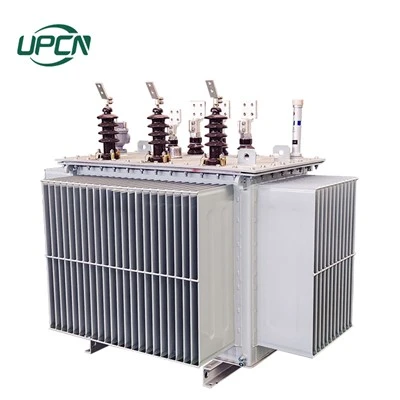
Let me wrap this up by saying that improving a pole mounted transformer’s voltage regulation isn’t about chasing a perfect number on a spec sheet. It’s about balancing design, maintenance, and site-specific needs to deliver reliable power that works for everyone. Over 12 years in this business, I’ve seen that the best solutions are the ones that work with the transformer, not against it—small upgrades to tap changers, coil design, and maintenance habits that add up to big improvements in reliability. If you’re dealing with voltage dips during peak hours, undervoltage calls from customers, or transformers that just don’t hold up in your climate, I encourage you to reach out and talk through your needs. We don’t just sell pole mounted transformers—we work with utilities to design solutions that fit their specific load, their climate, and their budget. The streetlights, the AC, the phones that keep people connected all depend on that small pole mounted transformer at the end of the line, and making sure it works as well as it can is worth the effort.
Dry Type Transformer References
ANSI Standard C57.12.00, General Requirements for Liquid-Immersed Distribution, Power, and Regulating Transformers
IEEE Standard C57.12.90, Test Code for Liquid-Immersed Distribution, Power, and Regulating Transformers
NEMA Standard TP 1, Distribution Transformers – Performance, Application, and Installation Guidelines
Electric Power Research Institute (EPRI) Report 1020781, Voltage Regulation Improvements for Distribution Systems
Henan Union Power Construction Group Co., Ltd.
Address: 701, Unit 1, Building 23, Phase II, Jindai Smart Industry Park, No. 17 Wenzhi Road,Guancheng Hui District, Zhengzhou City, Henan Province, P. R. China
E-mail: unionpower66@gmail.com
WebSite: https://www.unionpowertransformer.com/
