If you think about it, calendars are way more than just pages with dates you tear off each day. They’re the backbone of how humans organize work, trade, festivals, and basically every big thing we do as a society. But here’s the thing: our “standard” calendar now? It took thousands of years of messy, messy reforms to get right. And as a calendar supplier, I’ve spent way too many late nights digging into these historical messes—because if you’re gonna make a product that people rely on, you better know why the dates are the way they are. No jargon, no boring textbook stuff—just real people, real mistakes, and why your next calendar (from us, obviously) isn’t just pretty pages. Calendar

Let’s start with the OG calendar mess: the Roman one. Back in like 700 BCE, the Romans used a lunar calendar, tied to the moon’s cycles. But here’s the problem: a lunar year is only 354 days, right? The solar year (that’s the time it takes Earth to orbit the sun) is like 365 and a quarter days. So after a few years, the Roman lunar calendar was way off—harvest festivals were happening in winter, religious holidays were a total mess. To fix this, they added random “intercalary months” out of nowhere, like every couple of years, just to pad it to match the sun. But here’s the kicker: the guys in charge of adding these months were politicians. They’d add extra months to extend their terms, or skip them to mess with opponents’ election timelines. By the 40s BCE, the calendar was so broken that spring was falling in what was supposed to be March. Julius Caesar got fed up. He hired a mathematician from Egypt, named Sosigenes, to fix it.
That’s the Julian Calendar, 45 BCE. What did it do? It dumped the lunar cycle, went full solar, added a leap year every four years (simple, right?), and set the year to 365.25 days. But wait—here’s a tiny flaw that’d cause chaos 1,500 years later. The actual solar year isn’t exactly 365.25 days. It’s like 365.2422 days. So the Julian Calendar gained 11 minutes every year. Not a lot, but over centuries? It added up. By the 1500s, the calendar was off by 10 whole days. Easter, which the Catholic Church based on the spring equinox, was now falling on the wrong Sunday. Bishops were panicking.
Enter Pope Gregory XIII, who launched the Gregorian Reform in 1582. The fix? Skip 10 days that year—so October 4, 1582, was followed by October 15, 1582. Then, instead of a leap year every four years, we skip leap years on century years that aren’t divisible by 400. So 1900 wasn’t a leap year, 2000 was (it was divisible by 400, duh). But here’s the thing: not everyone bought this new calendar right away. Protestant countries hated following a pope’s order, so Britain and its colonies (including what’s now the US) didn’t switch until 1752. That meant they skipped 11 days, not 10—their calendar was even more off. And Russia? Didn’t switch until 1918, after the Bolshevik Revolution. Some Orthodox communities still use the old Julian Calendar for religious holidays, which is why Christmas for a lot of Orthodox folks is on January 7 now, instead of December 25.
Another wild reform: the French Republican Calendar. Yeah, that happened during the French Revolution, when they wanted to reset everything—king, church, old calendar, all that. Launched in 1793, this one was totally decimal: 12 months, 30 days each, split into three 10-day weeks (no more boring 7-day week, get with the revolution!). The extra 5 or 6 days at the end of the year were “sansculottides” – holidays for patriotism, no religious stuff. But it crashed and burned after only 12 years. Why? People hated the 10-day week—they were used to their 2 days off for rest and market days. Also, farmers couldn’t keep track of planting/harvest with the new month names. By 1805, Napoleon brought back the Gregorian Calendar, and that was the end of that. Wild to think a whole country tried to reinvent the wheel (well, the calendar) just because of a revolution.
Fast forward to the 20th century, another big one: the Soviet Union’s calendar reform, 1929. They were all about efficiency, and they thought the 7-day week was “bourgeois” (because it was tied to religion, obviously). So they switched to a 5-day work week—each factory or office had a set day off, no weekends for everyone. Then, in 1931, they tried a 6-day week, same idea: one fixed day off per person. But workers hated it. You couldn’t meet up with friends because everyone’s day off was different, store hours were a mess. They dumped that in 1940, went back to the 7-day week. Even the US had a tiny reform moment: the Uniform Monday Holiday Act in 1968, which moved some federal holidays (like Memorial Day, Labor Day) to Mondays so people got 3-day weekends. Made sense for work and travel, but it’s a little reform that most people don’t even notice now.
As a calendar supplier, this stuff matters so much to what we make. When we design a new calendar, we’re not just slapping dates on a page—we’re accounting for all these reforms, all these times when humans had to fix a broken system. Last year, we had a customer who was a small business owner, and they needed a calendar that showed both Gregorian and Julian dates—they had a lot of Orthodox clients. That’s a thing most big calendar companies skip, but for us, it’s about remembering that dates aren’t just numbers; they’re tied to culture, history, and how people actually live.
Calendars are never perfect, because life and society are always changing. We’ve got leap years, different time zones, religious holidays that jump around, even things like Daylight Saving Time (which is its own messy little thing, invented to save energy, now debated nonstop). That’s why when you pick a calendar, you want one that’s made by someone who gets the backstory—because if we didn’t, you’d end up with a date that’s wrong, or a holiday that’s mislabeled, and that defeats the whole point of a calendar.
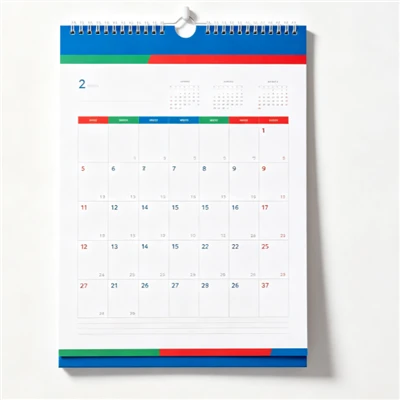
If you’re looking for a calendar that works for your team, your business, or even personal use—one that’s accurate, accounts for these historical quirks, and actually helps you plan—we’ve got options. We’ve got wall calendars, desk calendars, even custom ones for your brand. Whatever you need, we can help you put together something that fits. Hit us up to chat through what you’re looking for—no salesy fluff, just people who know their way around dates and calendars.
Brochure and Booklet References:
- Duncan, D. E. (1998). The Calendar: History and Future of the Year. University of California Press.
- Gingerich, O. (1982). The Gregorian Reform of the Calendar. Scientific American.
- Mayall, R. N. (1938). The French Republican Calendar. Speculum.
- Poska, A. (2018). Calendars and Time in Early Modern Europe. Cambridge University Press.
- Ziegler, K. (2012). The Roman Calendar from Numa to Constantine. Wiley-Blackwell.
Jiangyin Kingma Printing Co., Ltd.
As one of the most professional calendar manufacturers and suppliers in China, we also support customized service. Please feel free to wholesale bulk high quality calendar in stock here from our factory. Welcome to contact us for quotation.
Address: 803 Binjiang West Road, Jiangyin City, Jiangsu Province
E-mail: 275695527@qq.com
WebSite: https://www.kingmaprinting.com/
