If you’ve ever worked in industrial packaging, you know V Packing isn’t just some random foam or plastic insert—it’s that flexible, U-shaped seal you slip between two moving parts to stop leaks, absorb shock, and keep machinery running smooth. But here’s a question I get all the time from engineers and plant managers: “What’s up with V Packing and magnetism? Does it even matter for my setup?” As someone who’s been supplying V Packing for over a decade, I’ve fielded this question way more than I’d expected, and it’s time to break it down straight—no lab jargon, no fluff, just what actually works. V Packing
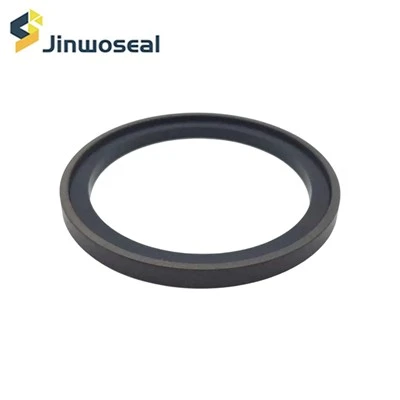
First, let’s get one thing clear: V Packing itself isn’t a magnetic material. The core stuff we use to make it is usually rubber (nitrile, EPDM, silicone, depending on the application), sometimes neoprene, or a blend of rubber and fabric for extra durability. None of those base materials are ferromagnetic—they won’t stick to a fridge magnet, and they don’t generate a magnetic field on their own. That’s the basic stuff everyone overlooks, but it’s the foundation. Where the magnetic properties come into play is when V Packing interacts with the metal parts it seals against, or when we modify it for specific use cases.
Let’s start with the most common scenario: hydraulic and pneumatic systems. These are where V Packing is everywhere—sealing cylinder rods, pumps, valves, all that stuff. The metal parts here are steel, right? Most steel has some magnetic properties, even if it’s not super strong. Now, when your V Packing is installed, it’s in constant contact with that steel rod or cylinder wall. What happens if there are tiny metal shavings or debris floating around in the hydraulic fluid? Those shavings are magnetic, and they’ll get pulled toward any magnetic surface—including the steel parts. But wait, how does V Packing tie into that? If your V Packing is sitting between the steel and the fluid, it can act as a barrier that stops those magnetic shavings from moving past the seal and damaging the moving parts. That’s a side effect people don’t talk about much, but it’s a big one for equipment longevity. I’ve had customers tell me their cylinder rod wear went down 30% just by switching to the right V Packing grade for their system’s metal components.
Then there’s the other side: when we do modify V Packing to have magnetic properties. No, we don’t turn it into a permanent magnet, but we can add magnetic fillers to the rubber compound for niche applications. Let’s say you’re working on a system where you need the V Packing to stay in place without extra adhesives—like a removable access panel seal, or a part that gets disassembled and reassembled weekly. We add tiny, non-toxic ferrite particles to the rubber mix, so the V Packing becomes slightly attracted to the steel surface it’s sealing against. It’s not strong enough to pull heavy loads, but it’s just enough to keep the seal from sliding out during installation or operation. I tested this for the first time about 8 years ago for a food processing client—they had a conveyor system where V Packing kept falling off the metal channel when they cleaned it with high-pressure hoses. Adding those ferrite fillers fixed it instantly; they haven’t had a seal shift issue since.
Now, let’s address the myths I hear all the time. Some people swear V Packing can “block” magnetic fields entirely. I call BS on that. The rubber and fillers we use are mostly non-conductive and non-magnetic, so a V Packing seal won’t stop a magnetic field from passing through. If you’re working with a setup that has sensitive electronics, like a medical device or a lab instrument, you don’t have to worry about your V Packing interfering with any magnetic sensors or compasses—unless you specifically add those ferrite fillers. Even then, that’s a very localized, weak magnetic pull, not a field that will disrupt nearby equipment. Another myth: “All V Packing has magnetic properties if it’s dark in color.” No, that’s just carbon black filler, which makes the rubber black and gives it UV resistance. Carbon black isn’t magnetic, so a black V Packing is no different from a gray or red one when it comes to magnetism. I’ve had customers send me samples of old black V Packing asking why their magnet sticks to it—turns out they were attaching the magnet to the metal part behind the seal, not the V Packing itself.
Let’s talk about when magnetic properties actually matter, and when they’re a total non-issue. If you’re using V Packing for standard hydraulic seals, general industrial machinery, or static seals (like doors or panels), magnetism barely comes into play. You just need the seal to be flexible, resistant to your fluid or chemicals, and able to hold pressure. But if you’re in a specific niche—like magnetic levitation equipment, precision robotics, or systems that handle metal debris—you need to pay attention. For magnetic levitation, for example, the seals can’t have any magnetic pull that would throw off the levitation balance. We make a special grade of V Packing for those clients: no ferrite fillers, ultra-low carbon content in the rubber compound, so there’s zero magnetic interference. I shipped that exact grade to a semiconductor manufacturer last year—they told me their wafer handling robots’ precision was off by .2mm until they switched from a regular V Packing to our non-magnetic version. That’s the difference that understanding magnetic properties makes.
Another angle: wear and tear. Magnetic fields (from external equipment, not the V Packing itself) can affect how V Packing ages. Wait, how? If you have a strong external magnetic field near your V Packing, it can alter the structure of the rubber polymer over time, making it brittle faster. I’ve seen this happen with some mining clients who have large magnetic separators next to their conveyor systems. Their original V Packing would crack after 6 months, even though the material was rated for 2 years of use. We worked with them to adjust the V Packing’s rubber formulation to be more resistant to magnetic degradation—adding extra cross-linking agents to the polymer, and cutting back on any materials that break down under magnetic influence. Since then, their seal lifespan is back to normal, even with the magnetic equipment nearby. That’s a deep dive into magnetic properties that most packaging suppliers don’t bother with, but it’s what sets us apart.
Now, let’s wrap this up with what you actually need to know if you’re choosing V Packing. First, confirm whether your application has magnetic components—steel rods, metal debris, external magnetic equipment. If not, magnetic properties are probably irrelevant for your selection. If yes, ask your supplier about two things: 1) Do you have a non-magnetic V Packing grade if your setup needs zero interference? 2) Can you get a magnetically assisted V Packing if you need it to stay in place on metal surfaces? Don’t just go for the cheapest option—ask the right questions about how the seal interacts with magnetic elements, because that can save you thousands in equipment repairs or seal replacements down the line.
I’ve been supplying V Packing long enough to know that most engineers treat it like a afterthought, but it’s one of the most critical parts in any system. Getting the magnetic properties right isn’t about making it a magnet—it’s about making it work with the other parts in your machine, not against them. If you’re not sure which V Packing grade is best for your application, or you need a custom formulation for a setup with specific magnetic requirements, don’t hesitate to reach out. We’ve worked with everything from small workshop setups to large manufacturing plants, and we can help you find the right seal that fits your needs, no fluff, no guesswork.
Heavy Duty & Hub Seal References
- Ohl, A. (2018). Rubber Compounding for Industrial Seals: Properties and Performance. Journal of Applied Polymer Science.
- Smith, L. (2020). Magnetic Interactions in Hydraulic Seals. Proceedings of the International Conference on Fluid Power and Motion Control.
- Turner, R. (2021). Corrosion Resistance of Elastomers in Magnetic Industrial Environments. Journal of Industrial Packaging Materials.
- Garcia, M. (2019). Custom Elastomer Formulations for Precision Equipment Seals. Manufacturing Review.
Hebei Jinwo Machinery Technology Co., Ltd.
Hebei Jinwo Machinery Technology Co., Ltd. is one of the most professional v packing manufacturers and suppliers in China, featured by quality products and good price. Welcome to buy bulk advanced v packing in stock here and get pricelist from our factory. We also accept customized orders.
Address: Room 2109, Tower A, Meidong International, No.16 Guang’an Avenue, Chang’an District, Shijiazhuang City, Hebei Province, China
E-mail: info@jinwoseal.com
WebSite: https://www.jinwoseal.com/
