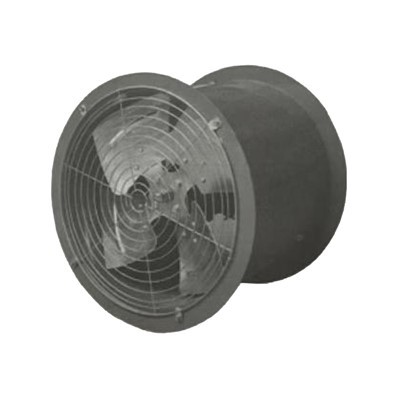
As a supplier of axial fans, I’ve witnessed firsthand the growing demand for energy-efficient solutions in various industries. Axial fans are widely used in ventilation systems, cooling applications, and industrial processes, making their energy-saving performance a crucial factor for both cost savings and environmental sustainability. In this blog post, I’ll share some practical strategies and insights on how to improve the energy-saving performance of an axial fan. Axial Fan
Understanding the Basics of Axial Fan Efficiency
Before diving into the strategies for improving energy efficiency, it’s essential to understand the key factors that affect the performance of an axial fan. The efficiency of an axial fan is typically measured by its airflow rate, pressure, and power consumption. A more efficient fan can deliver the same or higher airflow with less power input, resulting in significant energy savings over time.
The design of the fan blades plays a crucial role in determining its efficiency. Blades with a proper airfoil shape can generate more lift and less drag, allowing the fan to move air more effectively. Additionally, the number of blades, blade pitch, and blade angle can all impact the fan’s performance. A well-designed fan blade can optimize the airflow and reduce the energy required to move air through the system.
Another important factor is the motor efficiency. The motor is the power source of the axial fan, and its efficiency directly affects the overall energy consumption of the fan. High-efficiency motors can convert more electrical energy into mechanical energy, reducing the amount of wasted energy in the form of heat. When selecting a motor for an axial fan, it’s important to choose a motor with a high efficiency rating and to ensure that it is properly sized for the fan’s requirements.
Optimizing Fan Selection
One of the most effective ways to improve the energy-saving performance of an axial fan is to select the right fan for the application. When choosing an axial fan, it’s important to consider the specific requirements of the system, such as the required airflow rate, pressure, and temperature. Selecting a fan that is too large or too small for the application can result in inefficient operation and increased energy consumption.
To determine the appropriate fan size, it’s necessary to perform a detailed system analysis. This analysis should include factors such as the ductwork layout, the number of bends and turns in the duct, and the resistance of the filters and other components in the system. By accurately calculating the system requirements, it’s possible to select a fan that can deliver the required airflow at the lowest possible power consumption.
In addition to size, it’s also important to consider the fan’s efficiency rating. Fan efficiency is typically expressed as a percentage, and a higher efficiency rating indicates that the fan can convert more electrical energy into mechanical energy. When comparing different fans, it’s important to look for fans with a high efficiency rating to ensure that they are energy-efficient.
Improving Fan Design
Another way to improve the energy-saving performance of an axial fan is to optimize its design. There are several design features that can be incorporated into an axial fan to enhance its efficiency.
One such feature is the use of aerodynamic blade profiles. Aerodynamic blade profiles are designed to reduce drag and increase lift, allowing the fan to move air more efficiently. By using aerodynamic blade profiles, it’s possible to reduce the power consumption of the fan while maintaining or increasing its airflow rate.
Another design feature that can improve fan efficiency is the use of variable pitch blades. Variable pitch blades allow the fan to adjust its blade angle to optimize the airflow and reduce power consumption. By adjusting the blade angle, the fan can operate at different airflow rates and pressures, depending on the requirements of the system. This can result in significant energy savings, especially in applications where the airflow requirements vary over time.
In addition to blade design, it’s also important to consider the housing design of the axial fan. The housing of the fan should be designed to minimize airflow resistance and to ensure that the air is directed efficiently through the fan. A well-designed housing can reduce the power consumption of the fan and improve its overall performance.
Implementing Variable Speed Drives
Variable speed drives (VSDs) are another effective way to improve the energy-saving performance of an axial fan. VSDs allow the fan to operate at different speeds, depending on the requirements of the system. By adjusting the speed of the fan, it’s possible to reduce the power consumption of the fan while maintaining or increasing its airflow rate.
In many applications, the airflow requirements of the system vary over time. For example, in a ventilation system, the airflow requirements may be higher during peak hours and lower during off-peak hours. By using a VSD, the fan can be adjusted to operate at a lower speed during off-peak hours, reducing the power consumption of the fan and saving energy.
VSDs also offer other benefits, such as improved control and reduced wear and tear on the fan. By allowing the fan to operate at different speeds, VSDs can provide more precise control over the airflow and pressure in the system. This can result in improved system performance and reduced maintenance costs.
Regular Maintenance and Monitoring
Regular maintenance and monitoring are essential for ensuring the energy-saving performance of an axial fan. Over time, fans can become dirty, worn, or damaged, which can reduce their efficiency and increase their energy consumption. By performing regular maintenance, it’s possible to keep the fan in good condition and to ensure that it is operating at its maximum efficiency.
Maintenance tasks for an axial fan may include cleaning the fan blades, checking the motor bearings, and inspecting the electrical connections. By keeping the fan clean and well-maintained, it’s possible to reduce the amount of friction and drag in the system, which can improve the fan’s efficiency and reduce its energy consumption.
In addition to regular maintenance, it’s also important to monitor the performance of the axial fan. By monitoring the airflow rate, pressure, and power consumption of the fan, it’s possible to detect any changes in performance and to take corrective action if necessary. This can help to ensure that the fan is operating at its maximum efficiency and to prevent any potential problems from occurring.
Conclusion

Improving the energy-saving performance of an axial fan is a complex but achievable goal. By understanding the basics of fan efficiency, optimizing fan selection, improving fan design, implementing variable speed drives, and performing regular maintenance and monitoring, it’s possible to reduce the energy consumption of an axial fan and to achieve significant cost savings.
Axial Fan As a supplier of axial fans, I’m committed to providing our customers with high-quality, energy-efficient products and solutions. If you’re interested in learning more about how to improve the energy-saving performance of your axial fan or if you’re looking for a reliable supplier of axial fans, please don’t hesitate to contact us. We’ll be happy to discuss your specific requirements and to provide you with a customized solution that meets your needs.
References
- ASHRAE Handbook – Fundamentals. American Society of Heating, Refrigerating and Air-Conditioning Engineers, Inc.
- Fan Application and System Design. Air Movement and Control Association International, Inc.
- Energy-Efficient Motor Systems. U.S. Department of Energy.
Anhui Zhongxin Sanyuan Ventilation Equipment Co., Ltd.
We are one of the most professional axial fan manufacturers and suppliers in China, featured by quality products and good price. Please rest assured to buy customized axial fan made in China here from our factory. Also, pricelist is available.
Address: No. 1 Yuanxing Road, North District of Guangde Economic Development Zone, Guangde City, Xuancheng City, Anhui Province, China
E-mail: newsanyan@gmail.com
WebSite: https://www.newsanyan.com/
