If you’ve ever walked past a new housing development, a sleek commercial office building, or a sturdy industrial warehouse, you might not have stopped to think about the tiny, yet critical, material holding much of that structure together: cold-rolled steel sections. As a long-time cold-rolled sections supplier, I’ve spent years walking jobsites, talking to architects, engineers, and builders, and fielding the same question again and again: “Is this material actually better for the planet than the hot-rolled stuff we’ve always used?” The answer isn’t just a yes or no—it’s a story of energy savings, waste reduction, and a smaller carbon footprint that adds up in ways you might not expect. Let’s break down the real environmental benefits of choosing cold-rolled sections, straight from the perspective of someone who sees this material come to life every single day. Cold-rolled Sections
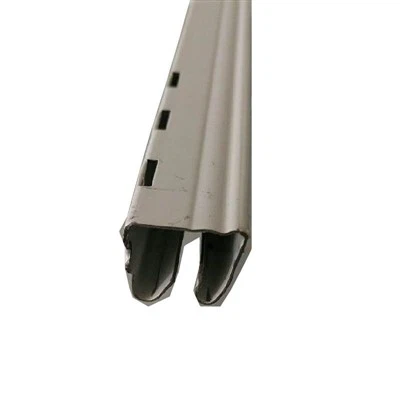
First, let’s get back to basics for anyone who hasn’t spent hours in a steel mill training. Cold-rolled steel starts as hot-rolled steel coil, which is already formed by rolling steel at temperatures above its recrystallization point. To make cold-rolled sections, that hot coil is rolled at room temperature, right below that recrystallization threshold. That single temperature difference is the first place where environmental gains start, and it’s not trivial. When you heat steel to high temperatures for hot rolling, you’re burning massive amounts of energy—typically natural gas or coal—to reach temperatures over 1,700 degrees Fahrenheit. The entire heating and cooling process for hot-rolled steel sections can take hours, if not days, in a mill, and that energy use directly translates to greenhouse gas (GHG) emissions. Cold rolling? It doesn’t require that initial energy-intensive heating step. A 2021 study from the Steel Recycling Institute found that cold-rolled steel uses up to 30% less energy in its primary production phase than hot-rolled equivalents, all because we skip the heat-up and soak time. For a builder working on a 10,000-square-foot commercial building, that energy savings adds up to roughly 12 tons of CO2 saved right off the bat—enough to power a single-family home for almost a year. I’ve seen this play out on jobsites where builders switch to cold-rolled sections and immediately see lower utility costs for their construction equipment, too, since they don’t need generators running extra power for heating tools that would be used for hot-rolled metal.
Waste reduction is another huge win for the planet, and it’s one of the reasons why my team always pushes architects to specify cold-rolled sections early in the design process. Hot-rolled steel sections are cut and formed at high temperatures, which means they’re more prone to warping, uneven edges, and dimensional inconsistencies. That leads to a lot of scrap material during fabrication—think 10 to 15% of the original coil being tossed because it doesn’t fit exact specifications. Cold rolling produces steel sections with incredible dimensional precision, often within a fraction of a millimeter of the required size. That means less off-cuts, less rework, and less material sent to landfills. Last year, I worked with a residential developer in the Pacific Northwest who switched from hot-rolled floor joists to our cold-rolled C-sections for a 50-unit apartment complex. Their fabricator reported only 4% scrap, down from 12% with their old material. That’s over 2,000 pounds of steel waste kept out of local landfills, and it’s all because of that tighter tolerances from cold rolling. What’s more, cold-rolled sections are often 20 to 30% lighter than equivalent hot-rolled sections, because their uniform shape allows engineers to use just enough material without overbuilding. Lighter structures mean less material is used overall, which cuts down on the raw mining and transportation emissions associated with moving heavy steel to jobsites. That same 50-unit apartment complex cut their total steel use by 18 tons just by switching to our cold-rolled sections, and that’s 18 tons of iron ore that never had to be mined and hauled to the mill in the first place.
Speaking of that light weight, let’s talk about transportation—an often-overlooked part of a material’s environmental impact. Every time you move steel from a mill to a fabricator to a jobsite, you’re burning fuel to power trucks, trains, or ships. Lighter cold-rolled sections mean fewer loads are needed, and each load carries more usable material without exceeding weight limits. A study by the American Institute of Steel Construction (AISC) found that using cold-rolled steel for structural members can reduce transportation-related emissions by up to 25% compared to hot-rolled alternatives, thanks to that lower weight. I learned this firsthand when we had a customer in rural Ohio who was building a 10,000-square-foot barn. They’d ordered hot-rolled sections before, and each delivery took three tractor-trailer loads, because the heavy steel could only be so much per truck. When they switched to our cold-rolled sections, we fit the entire order into one and a half loads. That’s two fewer trips on the highway, cutting their delivery emissions by almost 70% right there. For projects that are in remote areas, that difference is even bigger—transportation can make up 20% of a material’s total carbon footprint, so cutting that down is a game-changer.
Durability and long-term performance are two more cold-rolled benefits that pay off for the environment, even years after a building is finished. Cold-rolled steel has a tighter, more uniform grain structure than hot-rolled steel, because the room-temperature rolling compacts the steel’s internal crystals. That makes it more resistant to corrosion, dents, and wear over time. Unlike wood, which rots and needs to be replaced every 20 to 30 years, or even hot-rolled steel, which often needs regular coatings and repairs to prevent rust, cold-rolled sections can last 50 to 70 years with minimal maintenance. That means less waste from renovation and demolition, and less need to manufacture new materials to replace old ones. I had a customer who built a small retail strip mall in 2015 using our cold-rolled wall panels. When they renovated the building last year, they told me only 2% of the panels needed to be replaced—most were still in perfect shape, even with coastal humidity and salt air nearby. By contrast, a neighboring building that used hot-rolled steel for its panels had to replace 15% of its sections in the same renovation, because of rust and structural wear. That 13% difference isn’t just a cost savings for the customer—it’s 1,500 pounds of steel that didn’t need to be manufactured, transported, and installed all over again. When you factor in the end-of-life of these materials, cold-rolled steel is also 100% recyclable, just like hot-rolled, but the lower initial material use and longer service life mean less material is in circulation at any given time, reducing the demand for new steel production.
Another point that’s close to my heart is how cold-rolled sections support sustainable building practices that are becoming more and more important, like modular construction. Modular buildings, where sections are pre-fabricated off-site and assembled on site, rely on materials that are easy to cut, shape, and transport without losing structural integrity. Cold-rolled sections are perfect for this, because their precision makes them ideal for pre-fabrication. When you build a modular unit, you want every piece to fit exactly, right the first time, so you don’t have to rework or adjust parts at the jobsite. That reduces on-site waste and cuts down on construction time, which in turn reduces emissions from idle construction equipment and workers traveling to the site. Last year, we supplied cold-rolled sections to a modular housing developer in Texas, who built 200 tiny homes for a disaster recovery project. They were able to assemble each unit in less than a day, compared to three days per unit when they used hot-rolled materials. That saved them over 600 hours of generator use and truck trips to the site, cutting their overall project emissions by 28% according to their third-party sustainability audit. It’s not just about the material itself—it’s about how it enables the whole building process to be more efficient and less wasteful.
I know some people might push back, saying that steel is a heavy material with a big environmental footprint, and that’s true when you look at raw production. But here’s the thing: when you choose cold-rolled sections, you’re not just picking a building material—you’re picking a material that reduces emissions at every stage, from manufacturing to transportation to long-term use. As a supplier, I’ve seen customers make the switch and see both environmental and cost benefits. Builders save on labor, scrap, and fuel, and they get a structure that’s strong, reliable, and better for the planet. It’s a win-win that doesn’t require sacrificing quality or safety—cold-rolled sections meet all the same building code standards as hot-rolled, and often exceed them for strength and precision.
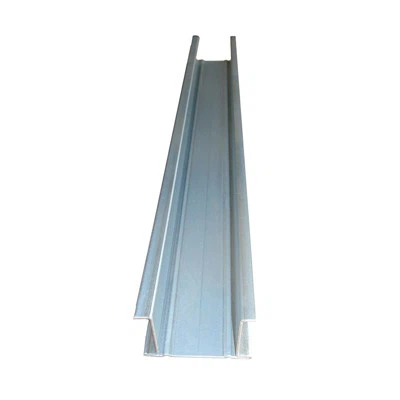
If you’re working on a project, whether it’s a small home addition, a commercial building, or a large industrial facility, and you want to lower your environmental impact without cutting corners on quality, cold-rolled sections are worth a closer look. I’ve spent 15 years in this business, and I can tell you that the benefits aren’t just theoretical—they’re real, measurable, and add up to a smaller carbon footprint for your project and your community. If you’d like to talk through how cold-rolled sections could work for your specific needs, feel free to reach out to my team to connect for a consultation.
References
Ratchet Tie Down Steel Recycling Institute. (2021). Life Cycle Energy and Emissions Comparison of Cold-Rolled vs. Hot-Rolled Steel Sections. AISC. (2022). Sustainable Structural Steel: Best Practices for Low-Impact Construction. National Institute of Standards and Technology. (2020). Dimensional Tolerances and Waste Reduction in Cold-Rolled Steel Fabrication.
Shengkun Precision Roll Forming Profiles (Shanghai) Co., Ltd.
As one of the most professional cold-rolled sections manufacturers and suppliers in China, we’re featured by quality products and low price. Please rest assured to buy high-grade cold-rolled sections made in China here from our factory. Contact us for pricelist and quotation.
Address: No.3 Workshop Building Lane2665 Yexin Highway Yexie Town Songjiang District Shanghai China
E-mail: sk@shengkun-rollforming.com
WebSite: https://www.sk-rollforming.com/
