If you’re running a lab, a manufacturing line that uses pure water, or even a small facility relying on a deionized (DI) water system, you’ve probably stared at the pre-filter section of your unit and wondered, “When do I swap this thing out?” As a DI system supplier, I get this question all the time—and not just from new customers who’ve never used one of these setups before, but even from folks who’ve been working with DI water for years and think they “know the drill.” Deionized Water System
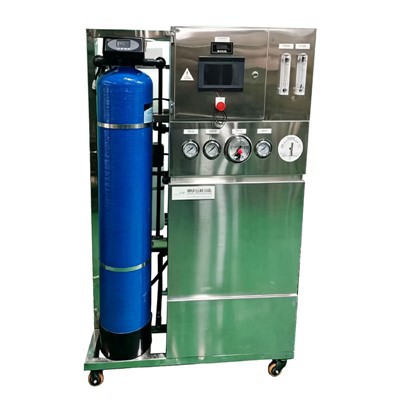
The short answer isn’t as cut-and-dry as “every 3 months” or “every 6 months” because so many factors change how fast that pre-filter clogs up. But let’s break this down like we’re chatting over a coffee (no stuffy industry jargon, I promise) so you actually get why pre-filter replacement matters, and how to figure out your own rhythm.
First, let’s do a quick, no-flashback basics check: what’s the pre-filter even for? The DI resin beads in your system do the heavy lifting—they pull charged ions (like calcium, magnesium, sodium, whatever’s messing up your water) out of the supply. But if you send raw, dirty water straight at those soft, porous resin beads, you’re gonna clog them with gunk before they even get a chance to work. That’s where the pre-filter comes in: it’s the first line of defense, catching big stuff—sediment from your municipal line, rust flakes from old pipes, silt from a well, even random debris from the water treatment plant—so the DI resin doesn’t get overwhelmed. Mess up the pre-filter, and you’re gonna have to replace way more expensive resin way sooner. Trust me, we’ve seen this happen so many times to customers who skipped checks.
Now, let’s get to the good part: how often should you replace it? Let’s start with the biggest variable that almost no one talks about: your source water. This is the #1 factor that makes one pre-filter’s life 2 weeks and another’s 6 months.
If you’re on municipal water, most systems here have pre-treatment steps, but that doesn’t mean your water is clean. If you live in an older city with rusty water mains (like parts of Pittsburgh, Chicago, or even some neighborhoods in Austin) or a place that has seasonal debris—like when farmers in the Midwest till their fields and sediment washes into the water supply—your pre-filter’s gonna clog fast. We had a customer last year in a small industrial park where the local water authority had a pipe break; their pre-filter went from clean to totally blocked in 10 days because all the dirt from the repair got pushed through the lines.
Then there’s well water, which is a whole other beast. If you have a private well, your water could have way more sediment, maybe even sand or iron particles, depending on what’s under your property. I remember a guy who runs a small machine shop out of his garage; his well had a lot of fine silt, so his pre-filter (which he thought would last 3 months) needed to be swapped every 4 weeks. No surprise there—well water’s way harder on pre-filters than municipal, usually.
Next up: your system’s flow rate and daily usage. Think about how much water you’re pulling through the system every single day. If you’re a small lab that uses 5 gallons of DI water a day for beaker rinses, that’s a totally different load than a car parts shop that uses 50 gallons an hour to wash parts before coating. Higher flow rates mean water is rushing through the pre-filter faster, so it catches debris quicker, clogging it sooner. We’ve had a customer that runs a 24/7 operation—they use their pre-filter every single minute of every day, so they swap it every 2 weeks. A small biotech lab that only uses DI water during standard 9-to-5 hours? Their pre-filter might go 6 months, no problem.
What about pre-filter type, too? This is another thing people sleep on. Not all pre-filters are the same. You’ve got string-wound filters, pleated filters, sediment-specific filters—each catches different sizes and amounts of gunk. A string-wound filter is cheaper, but it’s looser, so it catches larger particles but gets dirty faster. A pleated filter has more surface area, so it holds more debris before clogging, which means it lasts longer. If you’re using a cheap string-wound filter for a high-debris water source, you’re changing it way more than if you splurge on a pleated one, even though the pleated might cost a few bucks more upfront.
Wait, but here’s a tip: don’t just go by a generic schedule. The best way to know when to swap your pre-filter is to test it. Don’t rely on a timer. There are two super easy ways to check, no fancy tools needed.
First, watch the pressure gauge on your DI system. Most units have a little pressure gauge right before the pre-filter (or sometimes on the main inlet) that tells you the incoming water pressure. When the pre-filter is clean, pressure is at its normal level—usually around 40-60 PSI, depending on your area. As the filter clogs up, that pressure drops (or sometimes spikes, depending on the gauge, but most of the time it drops). If your pressure gauge is 10-15 PSI lower than normal, that’s your sign to swap. If you don’t have a gauge? That’s a problem—you should add one, honestly, it’s like a check engine light for your water system.
Second, check your DI water quality. If the pre-filter is clogged, it’s not letting water through fast enough, so the water sitting around in the lines can get stagnant, or the gunk can get pulled into the DI resin, which makes the final product’s resistivity drop. If you notice your DI water isn’t as pure as it should be (if you use a TDS meter, that’s when the TDS starts creeping up above 1 ppm, or whatever your system’s target is), check the pre-filter first. 9 times out of 10, a dirty pre-filter is the culprit, not the resin.
Now, let’s talk about mistakes we see customers make all the time that mess up pre-filter life. First, they wait until the pressure is really low, like the system is barely pushing water through, to swap it. Don’t do that—when it’s that clogged, it’s already letting small particles through, which are damaging the DI resin. Resin replacement is way more expensive than pre-filter, so don’t cut corners here.
Second, they buy the cheapest pre-filter they can find, even if it doesn’t fit their system or their water needs. We had a restaurant customer a while back who bought a no-name filter off Amazon for their DI system used for coffee and ice; it was way too thin, so it started letting micro-particles through, which made their ice cloudy and their coffee taste off. We switched them to a compatible, quality filter, and suddenly their pre-filter lasted 3 months instead of 2 weeks, no more cloudy ice.
Also, seasonal changes matter. I can’t tell you how many times we get calls in the spring or fall about pre-filters clogging faster. In the spring, all the rain melts snow, and runs off into water systems, picking up leaves, dirt, and sediment. In the fall, leaves decompose, and that stuff gets into the water too. So you might need to check your pre-filter twice a season during these times, just to be safe.
What if you’re still not sure? Let’s do a quick rough estimate to give you a starting point, which is way better than a random number. If you’re on:
- Municipal water, low usage (5-10 gallons a day), good pipes: every 4-6 months, start checking monthly
- Municipal water, high usage (20+ gallons a day), older pipes: every 2-3 months, check bi-weekly
- Well water, low debris, low usage: every 3-4 months
- Well water, high debris, high usage: every 1-2 months, check weekly
But again, this is just a starting point—always check with your pressure gauge or water quality.
Another thing to note: if you’re doing regular maintenance on your DI system, the pre-filter check should be part of that. We always tell customers to do a quick check every time they refill the DI storage tank. That’s when you’re already around the system, so a 2-minute glance at the pressure gauge or a quick feel of the pre-filter (if it’s accessible) is easy, no extra work.
Wait, should you ever replace the pre-filter on a set schedule? Only if you know your source and usage are super consistent. Like, if you’re a lab that uses the same amount of DI water every day, same source water, same filter type, and you’ve tracked for a year that it lasts exactly 5 months, then you can set a reminder. But if anything changes—you get a new water source, your usage goes up, the city does pipe work—you should adjust that schedule right away.
We had a customer that makes circuit boards, uses DI water for rinsing. They’ve been with us for 3 years, their usage is steady at 30 gallons a day, municipal water, so their pre-filter was every 3 months. Then last summer, the city did a pipe replacement near their facility, and they noticed their pressure dropped a lot, so they swapped the pre-filter a month early, and found it was totally covered in dirt from the pipe work. If they’d waited their regular 3 months, that dirt would have ruined a bunch of DI resin, which costs them thousands of dollars. That’s a real story, by the way—no exaggeration.
Now, let’s talk about why this matters for you beyond just saving money on resin. If you’re using DI water for a specific process—like pharmaceutical manufacturing, electronics cleaning, lab testing, food and beverage production—your product’s quality depends on that DI water being pure. A dirty pre-filter leads to impure water, which leads to bad test results, defective parts, or even out-of-spec food. Pre-filter replacement isn’t just a maintenance task—it’s part of keeping your product up to standard.
I know this all sounds like a lot, but it’s actually pretty simple once you get the hang of it. The biggest mistake we see is people overcomplicating it, or just setting a calendar reminder and forgetting to check what’s actually going on with their system. At the end of the day, the pre-filter’s job is to protect your more expensive DI components, so taking 2 minutes a week to check on it is way cheaper than replacing resin or fixing a bad product batch.
If you’re still unsure about your specific setup—whether you need a different pre-filter type, how often you should check, or what pressure gauge works best—we’re here to help. We’ve worked with all kinds of facilities, from small home labs to large manufacturing plants, and we can give you a tailored recommendation based on your source water, usage, and system type. Just reach out to our team to chat through your needs, no pressure, no sales pitch (well, okay, a little, but we’re here to help you get the most out of your DI system).
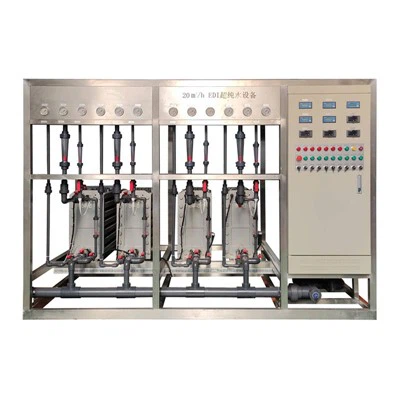
So to wrap this up: don’t rely on generic timelines. Check your pressure and water quality regularly, adjust based on your source and usage, and don’t wait until the pre-filter is totally clogged to swap it. That’s how you keep your DI system running smoothly, keep costs down, and get the pure water you need for whatever you’re using it for.
Reverse Osmosis Water System References
- Deionized Water System Design and Maintenance Guide, International Water Association, 2021
- Sediment Pre-Filter Performance in Water Treatment Applications, Journal of Water Process Engineering, Vol. 42, 2021
- Industrial DI System Operational Best Practices, Association of Water Technologies, 2022
- Source Water Quality Impacts on Pre-Filter Lifespan, Environmental Science & Technology, Vol. 55, No. 12, 2021
Shandong Yanuo Environmental Protection Equipment Co., Ltd.
We’re well-known as one of the leading deionized water system manufacturers and suppliers in China, featured by quality products and good price. Please rest assured to buy bulk deionized water system made in China here from our factory. Customized orders are welcome.
Address: North Side of the Road, 1,000 Meters West of the Intersection of Fenghuangshan West Road and Provincial Highway S102, Wangfu Subdistrict, Qingzhou City, Weifang City, Shandong Province.
E-mail: ynhb.499973983@gmail.com
WebSite: https://www.zkyaruo.com/
