As a seasoned professional in the optical transceivers industry, I often encounter queries from clients regarding the differences between 10G and 40G optical transceivers. In this blog post, I’ll delve into the technical details, performance implications, and applications of these two types of transceivers, sharing insights that come from years of hands-on experience in the field. Optical Transceivers
Technical Specifications
Let’s start with the most fundamental difference: data rate. A 10G optical transceiver is designed to support a data transmission rate of 10 gigabits per second (Gbps). This speed is sufficient for many enterprise – level networks, small to medium – sized data centers, and some high – end home networks. On the other hand, a 40G optical transceiver can handle data at a rate four times faster, reaching 40 Gbps. This high data rate is crucial for large – scale data centers, high – performance computing clusters, and high – bandwidth backbone networks.
The modulation techniques used in these transceivers also vary. 10G transceivers commonly use non – return – to – zero (NRZ) modulation. NRZ is a relatively simple and cost – effective modulation scheme where the signal represents a ‘1’ or a ‘0’ by maintaining a constant voltage level for the duration of a bit period. It is well – suited for short – to – medium – distance transmissions and has been a staple in 10G networks due to its simplicity and reliability.
In contrast, 40G transceivers often employ more advanced modulation techniques such as differential quadrature phase – shift keying (DQPSK) or four – level pulse – amplitude modulation (PAM4). DQPSK encodes two bits per symbol, reducing the symbol rate compared to NRZ and making it more suitable for high – speed long – haul transmissions. PAM4, on the other hand, uses four different amplitude levels to represent two bits per signal element, enabling higher data rates within the same bandwidth.
Optical Wavelength and Reach
When it comes to optical wavelengths, 10G transceivers typically operate at 850nm (for multimode fiber), 1310nm, or 1550nm (for single – mode fiber). The 850nm multimode transceivers are mainly used for short – distance applications within a data center, typically up to a few hundred meters. The 1310nm and 1550nm single – mode transceivers can support longer distances, with 1310nm usually capable of reaching up to 10 kilometers and 1550nm extending to much longer distances, sometimes up to hundreds of kilometers.
40G transceivers, too, utilize 1310nm, 1550nm, and in some cases, other wavelengths depending on the specific application and form factor. The reach of 40G transceivers can vary widely. For example, a 40GBASE – SR4 multimode transceiver (using 850nm) is designed for short – range data center connections, with a reach of around 100 – 150 meters. In comparison, 40GBASE – LR4 single – mode transceivers (using 1310nm) can reach up to 10 kilometers, and 40GBASE – ER4 (using 1550nm) can support links up to 40 kilometers or more.
Form Factors
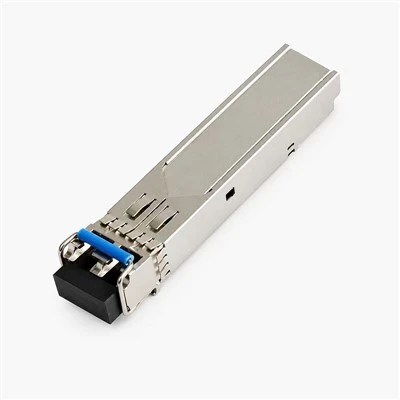
The physical form factors of 10G and 40G transceivers are also distinct. 10G transceivers commonly come in the Small Form – factor Pluggable Plus (SFP+) and XFP form factors. The SFP+ is a popular choice due to its small size and high density, making it suitable for use in high – port – count switches and routers. It is also relatively cost – effective, which is a significant advantage for many network deployments. The XFP, although a bit larger, was an earlier standard for 10G connections and is still used in some legacy systems.
40G transceivers are typically available in larger form factors such as the Quad Small Form – factor Pluggable Plus (QSFP+). The QSFP+ form factor can accommodate four 10G channels or a single 40G channel, making it highly versatile for different network architectures. It allows for higher port densities and is well – suited for high – bandwidth applications in data centers.
Power Consumption and Heat Dissipation
Power consumption is an important consideration in any network deployment, as it directly impacts operating costs and environmental sustainability. 10G transceivers generally consume less power compared to 40G transceivers. SFP+ 10G transceivers typically consume around 1 – 3 watts, depending on the specific model and application. This low power consumption makes them ideal for energy – efficient network designs, especially in smaller installations.
In contrast, 40G transceivers, such as QSFP+ modules, can consume anywhere from 3 to 8 watts or more. The higher power consumption of 40G transceivers is due to the more complex electronics and higher – speed data processing required. Additionally, this increased power consumption leads to higher heat generation, which necessitates more sophisticated cooling solutions in data centers.
Cost Considerations
Cost is always a major factor in network planning and deployment. Generally, 10G optical transceivers are more affordable than 40G transceivers. The cost of SFP+ 10G transceivers can range from a few tens of dollars to a few hundred dollars, depending on the performance, reach, and brand. This makes 10G transceivers a cost – effective solution for networks with moderate bandwidth requirements.
40G transceivers, on the other hand, are more expensive due to their higher data rates, advanced modulation techniques, and larger form factors. The price of QSFP+ 40G transceivers can start from a few hundred dollars and go up to over a thousand dollars, depending on the specific features and performance capabilities. However, as technology advances and economies of scale come into play, the cost of 40G transceivers is gradually decreasing.
Applications
The choice between 10G and 40G optical transceivers largely depends on the specific application. 10G transceivers are widely used in enterprise networks for connecting servers, switches, and storage devices. They are also suitable for local – area networks (LANs) and campus – wide networks where the bandwidth requirements are relatively moderate. For example, in a small to medium – sized business, 10G connections can provide sufficient speed for day – to – day operations such as file sharing, email, and basic web applications.
40G transceivers, on the other hand, are essential for large – scale data centers that need to handle massive amounts of data traffic. They are used for high – performance computing (HPC) applications, where data processing and transfer speeds are critical. In addition, 40G transceivers are used in backbone networks of service providers to connect different regions and data centers, ensuring high – speed data transmission across the network.
Making the Right Choice
When it comes to choosing between 10G and 40G optical transceivers, network administrators and IT managers need to carefully evaluate their network requirements. Factors such as current and future bandwidth needs, budget constraints, physical space limitations, and power consumption all play a role in the decision – making process.
If your network has relatively stable, moderate – bandwidth requirements and you are on a tight budget, 10G transceivers may be the best choice. They offer a cost – effective solution that can meet your day – to – day network needs. However, if your network is experiencing rapid growth in data traffic, or if you are involved in high – performance computing or large – scale data center operations, then 40G transceivers are likely the better option. They can provide the high – speed data transfer and scalability required to keep up with the increasing demands of modern networks.
Contact Us for Your Optical Transceiver Needs
Optical Module As an experienced optical transceivers supplier, we understand the complexities of choosing the right transceiver for your network. Our team of experts is ready to assist you in making an informed decision based on your specific requirements. Whether you need 10G transceivers for a small – scale network or 40G transceivers for a large – scale data center, we have a wide range of high – quality products to meet your needs. Contact us today to start a discussion about how we can help optimize your network performance with the right optical transceivers.
References
- "Optical Fiber Communication Systems" by Govind P. Agrawal.
- Industry whitepapers on optical transceiver technologies from leading manufacturers.
- Technical specifications and datasheets of 10G and 40G optical transceivers from various vendors.
Zhejiang Chengmei Technology Co., Ltd.
As one of the most professional optical transceivers manufacturers and suppliers in China, we’re featured by quality products and good price. Please rest assured to wholesale bulk premium optical transceivers made in China here from our factory. Also, quotation is available.
Address: No. 383, Jinhe Road, Qinshan Street Industrial Park, Haiyan County, Jiaxing City, Zhejiang Province
E-mail: shiwei@cm-semi.com
WebSite: https://www.cmfiber.com/
