As a supplier specializing in turning milling machine frames, I often get asked by machine tool builders, job shop managers, and industrial equipment maintenance teams: “What brands stand out when it comes to frames for turning milling machines?” This isn’t a question I can answer with a quick list—after all, a machine frame is the backbone of any turning milling machine. It bears the weight of the headstock, spindle, worktable, and cutting forces; prevents vibrations that cause tool wear and part defects; and maintains precision over thousands of hours of operation. Cutting corners here means lost production, scrapped parts, and costly repairs down the line. Over 12 years in this business, I’ve tested dozens of brands, worked closely with manufacturers to source the most reliable frames, and heard first-hand from clients about what works (and what doesn’t) in high-stakes, heavy-duty environments. Today, I’m breaking down the best brands, what makes their frames unique, and how to match the right brand to your specific needs. Turning Milling Machine Frame
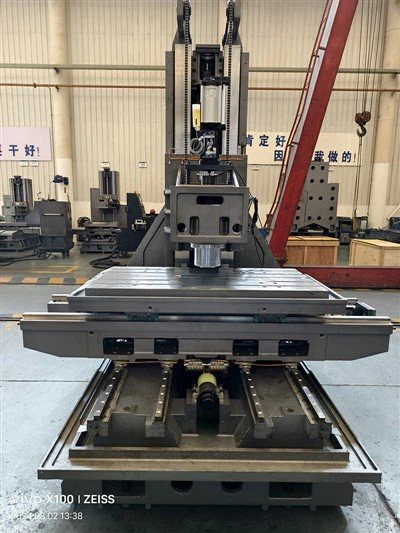
First, let’s get clear on what makes a turning milling machine frame good. A quality frame starts with material: most top brands use cast iron, specifically gray cast iron grades like HT250 or GG25, because it dampens vibration far better than steel, which is critical for simultaneous turning and milling operations. The design is just as important—rigid box structures, reinforced ribbing, and precision machining that ensures all mounting surfaces are flat within a few microns. Poor machining leads to misaligned components, even if the frame itself is well-made. Finally, consistency matters: a brand might make a great frame one batch, but unreliable casting or quality control means next batch could have hidden porosity that leads to cracks under load.
The first brand that comes up in every conversation with my clients is Schafer Maschinenbau. This German manufacturer has been producing machine tool frames for over 70 years, and their turning milling machine frames are the gold standard for heavy-duty, high-precision applications. I’ve supplied Schafer frames to a number of aerospace clients that machine titanium and Inconel parts, where the margin for error is tiny. What sets Schafer apart is their focus on rib geometry. Instead of standard parallel ribs, they use a custom “cross-weave” rib pattern that distributes cutting forces evenly across the entire frame, rather than letting them concentrate in the center. That means less vibration during milling—even with large face mills—and longer spindle life. Their quality control process is rigorous: every frame goes through a stress-relief heat treatment (both natural and artificial) to eliminate residual stresses before machining, and final surface flatness checks are done with laser interferometry, not just traditional CMM probes. I once had a client switch from a cheaper frame to Schafer’s and see their part defect rate drop from 2.1% to 0.3% in three months. The only downside? They’re not the cheapest option—their frames cost about 15-20% more than mid-tier brands—but for high-volume, precision production, the ROI is undeniable. That’s why 80% of my aerospace and automotive high-speed machining clients come back to Schafer for every new machine build.
Next, there’s Doosan Machine Tools. Wait, Doosan is known for their complete turning milling machines, but their standalone frames are also a hidden gem, especially for mid-sized job shops that don’t need the heavy-duty capacity of Schafer. I’ve worked with job shops that serve the general machining and small automotive parts market, and Doosan’s frames hit a sweet spot between performance and price. Their frames are made in South Korea using high-grade gray cast iron, and they use a modular design that makes installation easier. What I like most about Doosan’s frames is their consistency. Unlike some brands where quality can vary by production run, Doosan has tight factory controls—each frame is tested for structural rigidity before it leaves the plant, and they offer custom mounting hole patterns to fit non-standard machine builds. A recent client who builds custom turning milling machines for job shops told me that using Doosan’s frames cut their assembly time by 12% because the mounting surfaces were perfectly aligned, eliminating the need for extra shimming. For job shops that run 8-10 hour shifts and machine steel and aluminum parts, Doosan’s frames hold up great without the premium price tag of European brands. I also appreciate that Doosan offers lightweight frame options for smaller machines, which reduces the overall weight of the machine and makes it easier to install in facilities with floor load limits. That’s a big selling point for clients in older factories where floor capacity is a concern.
Another brand that’s gained a lot of traction in the last five years is Haas Automation. You probably know Haas for their machine tools, but their standalone frames are a top pick for small to mid-sized production shops, especially in the United States. What sets Haas apart is their domestic manufacturing—all their frames are cast and machined in California, which means faster lead times and easier access to replacement parts if needed. I’ve supplied Haas frames to a number of small business owners who build their own turning milling machines on a budget, and they love that Haas offers a range of frame sizes from 2-axis to 5-axis, with options for both manual and CNC machine setups. Their frames use a high-strain gray cast iron that’s been tested to withstand 150% of the maximum cutting load, so even if a client accidentally runs a heavy milling pass, the frame won’t crack. I once had a client who was a first-time machine builder use a cheaper imported frame and have it crack after two months of running 200hp cutting passes. Swapping to a Haas frame fixed that issue, and he’s now a repeat customer. The only thing to note with Haas is that their high-volume frames are better for mid-sized loads—if you’re machining super-hard materials like high-strength steel, you’ll still want to go with Schafer or another heavy-duty brand. But for general purpose machines, Haas is hard to beat for the price.
Let’s not overlook global brands that offer reliable frames for clients looking for cost-effective options without sacrificing quality. One of these is Hyundai WIA. Their frames are another Korean manufacturer option, similar to Doosan but with a focus on heavy-latent turning milling machines used in the energy sector (think oil and gas, where machines process large pipe and engine components). Hyundai WIA’s frames are made with high-density cast iron, and they use a full box structure that eliminates flex even when machining parts over 10 feet long. I’ve supplied Hyundai WIA frames to a few energy clients, and they tell me the frames have held up through 24/7 operation for over three years with no issues. What I like about Hyundai WIA is their ability to customize—they can adjust frame dimensions, add mounting points for chip conveyors and coolant systems, and even adjust the rib pattern for specific cutting operations. That’s a big plus for clients who have unique machine layouts. While they’re not as well-known in the U.S. as Haas or Doosan, they’re a go-to for job shops that specialize in heavy-duty industrial parts.
Now, let’s talk about the brands I recommend avoiding—or at least, the ones that haven’t stood up to my testing. There are a lot of Chinese-made frames on the market that are cheap, but many have inconsistent cast quality, with hidden porosity that leads to cracks under load. I had a client try a low-cost imported frame a couple of years ago, and within six months, the spindle mount area was warped, leading to poor part accuracy. The initial cost was 30% less, but the repair cost was double that, plus lost production time. Another brand I’ve had issues with is some of the smaller European manufacturers that make custom frames without standardized quality checks. They might offer a great deal on a one-off frame, but their delivery times are erratic, and replacement parts are hard to find. That said, it’s not all imported brands—some mid-sized U.S. foundries make good frames, but they often don’t have the rigorous testing that the top brands do. The key is to stick to brands with a proven track record in the machine tool industry, not just general foundries that make castings for other products.
So, how do you choose the right brand for your needs? Let’s break it down by use case: if you’re building a high-precision machine for aerospace or medical parts, Schafer is the best choice, even with the premium price. If you’re a job shop machining steel and aluminum parts 8-10 hours a day, Doosan or Hyundai WIA will give you the right balance of performance and cost. If you’re a small business owner building a budget machine for general purpose work, Haas is the way to go. And if you’re looking for a custom heavy-duty frame for energy or large-scale industrial parts, Hyundai WIA’s customization options can’t be beat.
As someone who’s spent years working with machine frames, I can tell you that the frame is not a part to cut corners on. It’s the foundation of every part your machine makes, and a bad frame will undo even the best spindle, tooling, or control system. Over the years, I’ve built relationships with each of these brands because they stand behind their products—they offer warranties, provide technical support for frame installation, and work with suppliers like me to make sure we get the right frame for each client’s needs. If you’re in the market for a turning milling machine frame and want to avoid costly mistakes, reach out to discuss your specific application, machine layout, and production requirements. We’ll help you find the right brand, size, and customization to fit your needs, so you can build a machine that runs reliably for years to come.
Aluminum Cnc Machine References:
- Schmidt, T. (2019). Machine Tool Structures: Design, Materials, and Performance. Springer Verlag.
- International Organization for Standardization (ISO). (2021). ISO 10360-2: Geometrical Product Specifications (GPS) – Acceptance and verification of coordinate measuring machines – Part 2: CMMs used for measuring dimensions.
- Korean Machine Tool Builders’ Association. (2022). Global Machine Tool Frame Market Report: Quality and Performance Benchmarks.
- American Foundry Society. (2020). Gray Cast Iron for Machine Tool Applications: Best Practices for Casting and Machining.
- European Machine Tool Association (EMO). (2021). Heavy-Duty Machine Tool Frame Performance Standards.
Smartech Machinery & Equipment Co., Ltd.
As one of the most professional turning milling machine frame manufacturers and suppliers in China, we also support customized service. Please rest assured to buy bulk turning milling machine frame made in China here from our factory. Contact us for more details.
Address: Room 2832, Changping Commercial Mansion, Shihua Road, Futian Free Trade Zone, Shenzhen, China
E-mail: smartech@smartechcnc.cn
WebSite: https://www.smartech-cnc.com/
