When someone first asks me, “How much does a folding house cost?” I don’t just pull a number out of thin air. As someone who’s been in the folding house supply business for over eight years, I know this question always comes with context—where someone wants to put the house, what they plan to use it for, how big it needs to be, and whether they’re after something that works for a weekend getaway or a permanent residence. I’ve had builders call me asking for a quick extra space for their crew on a remote job site, small business owners wanting a pop-up retail space for a summer farmers’ market, and even a family who wanted to replace their old backyard shed with a guest house for their aging parents. Each time, the answer isn’t a fixed price. It’s a breakdown of what goes into every folding house we design and build, and what factors actually shift that final number. Folding House
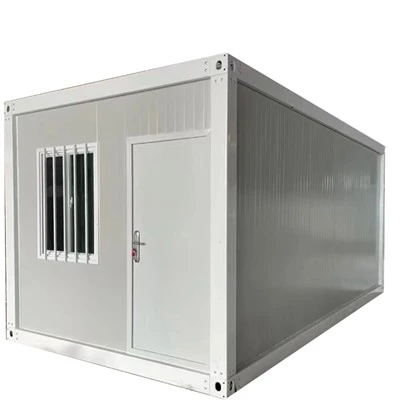
Let’s start with the core thing that makes folding houses different from traditional stick-built homes: their portability and ability to fold down for transport and storage. That design doesn’t just sound nice—it changes every part of the build. For one, transportation is a big cost driver. If you order a folding house that’s designed to fold to fit on a standard flatbed truck, you don’t have to pay for oversize load permits, which add hundreds or even thousands of dollars depending on where you’re shipping it. But if you need a custom size that’s too big for that standard fold, you’ll have to account for those permits, and that number climbs fast. I had a customer last year who wanted a 400-square-foot folding guest house for a remote mountain lot in Colorado. The standard size works for most places, but his lot was tucked in a narrow valley with tight road turns, so we had to adjust the fold profile and get special oversize permits. That added $1,800 to his total cost, something he didn’t anticipate because he thought all folding houses were the same size when folded.
Next is size and layout, which is another big variable. Our most popular base model is a 280-square-foot folding studio, perfect for a small office or a weekend cabin. That starts at around $22,000, but that’s just the base price. If you want to split it into a tiny bedroom and a small kitchenette, add another $1,500 for the internal framing and partition walls. If you need more space—say, a 500-square-foot two-bedroom folding house for a full-time resident—that jumps to about $38,000, and that’s before you add any extras. I always tell customers to think carefully about their needs here. One customer a few years back ordered the base model thinking he’d only use it for a home office, but six months later he called asking to add a small bathroom. Retrofitting a folding house after it’s built is way more expensive than adding those features upfront, so I make sure to walk people through their current and future needs before they commit.
The materials you choose also make a huge difference. We build our folding houses with galvanized steel frames because they’re durable, rust-resistant, and hold up well to being folded and transported multiple times. That frame is non-negotiable, but the exterior and interior finishes are where you can adjust the cost. Our standard exterior is a high-quality vinyl siding that’s weatherproof, low-maintenance, and works in every climate from hot deserts to snowy mountain towns. That’s included in the base price. If you want something like cedar siding for a more traditional look, that adds about $4,000. For the interior, our standard finish is laminate flooring and basic drywall with a coat of paint. If you prefer hardwood floors, energy-efficient vinyl windows, or a mini-split HVAC system (something a lot of our customers want for year-round use), those are add-ons. A mini-split alone is around $2,500, and hardwood floors add another $3,000 for the base model. I remember a couple who wanted their folding house to serve as a permanent home for their retired life, so they opted for the cedar exterior, hardwood floors, and a full kitchen with quartz countertops. Their total came to just over $42,000, which was still thousands less than building a small stick-built home in their area, and they loved that they could fold it if they ever wanted to move closer to their grandkids.
Then there are the site preparation and installation costs, which are often the part people forget about. A folding house isn’t something you just drop on a patch of grass and use. You need a level, stable foundation. For most of our customers, a concrete slab works best, and that’s usually around $6,000 to $8,000 depending on where you live. If your lot has uneven terrain, you might need to add grading, which can be another $1,000 to $3,000. You also need utilities: electrical, plumbing, and sewer or a septic system. Some customers want a fully hook-up-ready house, so we work with local electricians and plumbers to run the lines to the house site. That can add $3,000 to $5,000. For people who want something more off-grid, we also offer solar panel packages, rainwater collection systems, and composting toilets. A basic solar setup for a folding house is around $4,500, and that’s a popular add-on for customers who want to place their house in remote areas without access to grid power.
I also want to be transparent about what’s included in every price we quote, because a lot of suppliers hide fees that add up later. When we send a quote, it includes the fully built folding house, delivery to a standard location within 100 miles of our workshop, and basic setup (we unfold it, level it on the foundation, and connect the main utility lines). It also includes a 10-year warranty on the frame and a one-year warranty on all other parts. Some suppliers will advertise a low base price, then charge extra for delivery, setup, or even the locks on the doors. We don’t do that. I’ve heard too many horror stories from customers who got a quote from another company for $15,000, only to find out they’d have to pay $7,000 for delivery, $3,000 for setup, and more for basic electrical work. Our pricing is all-in, so customers don’t have to worry about surprise fees.
Now, let’s talk about the range you can expect. For a small, basic folding studio—say, 200 square feet, with vinyl siding, laminate floors, no HVAC, and just a foldable interior that can be set up in a couple of hours—you’re looking at around $18,000 to $20,000, plus site prep and utilities. That’s perfect for a home office, a she-shed, or a small storage space that you can move if you need to. For a mid-sized model, the 280-square-foot studio with a mini-split HVAC, basic kitchenette, and vinyl exterior, that’s $24,000 to $26,000, plus site costs. That works for a guest house, a mobile retail stand, or a small vacation cabin. For a larger, more permanent model, 450 to 500 square feet, with two bedrooms, a full bathroom, hardwood floors, and a solar system, you’re looking at $36,000 to $42,000, plus site prep. That’s comparable to building a tiny home, but our folding houses have the added benefit of being transportable if you ever need to move.
I know a lot of people ask if folding houses are worth the cost, and that’s a question only you can answer based on your needs. For someone who needs a temporary space for a job site that will be moved in two years, a folding house is way cheaper than building a permanent structure that you’ll have to tear down or move. For someone who wants a small guest house that they can use as an extra space for family, or a rental property that they can relocate if they move, it’s a smart investment. I had a customer who bought a folding house as a rental in a popular tourist area. He paid around $25,000 for the base model, added a kitchen and bathroom for $3,000, and spent $7,000 on site prep and utilities. He rents it out for $1,200 a month, and he says he’ll pay off the total cost in about two and a half years, plus he can move it to another location if the area’s tourism drops. That’s the kind of return you don’t get with a traditional rental space.
But I also want to be honest about the limits. Folding houses aren’t for everyone. If you need a full-size, multi-story home with all the same features as a traditional stick-built house, they might not be the right fit for you. They’re designed to be portable, so they don’t have the same open floor plan or square footage as a traditional home, and they don’t have the same resale value as a permanent structure in a lot of areas. But if you need flexibility, affordability compared to traditional builds, and a space that’s easy to move, they’re hard to beat.
Here’s the thing I always tell new customers: don’t just look at the sticker price. Look at what you get. We build our folding houses to last, not to be cheap. The galvanized frame we use can handle being folded and unfolded hundreds of times, and the materials we use hold up to extreme weather. We’ve had customers who’ve had their folding houses for over five years, moved them three times, and still have no issues with the structure. That durability is something that cheaper, lower-quality folding houses don’t offer, and it’s why our customers come back to us when they need an extra space, or refer us to friends and family.
If you’re thinking about getting a folding house, the best thing you can do is reach out to us with your specific needs. Tell us what you want to use it for, how big you need it, where you plan to put it, and whether you need utilities or off-grid features. We’ll send you a detailed, no-obligation quote that breaks down every cost, no hidden fees. I’ve worked with everyone from first-time homeowners to large construction companies, and I take the time to make sure every customer gets a folding house that fits their budget and their needs, not just the cheapest one we can sell.
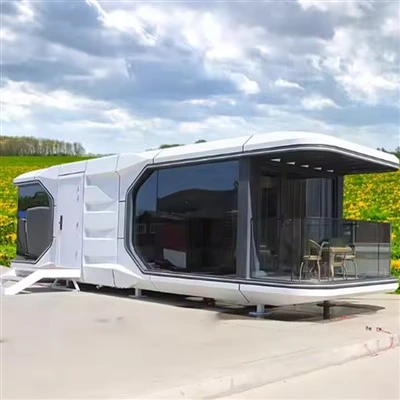
Whether you need a small extra space for your home, a temporary office for a job site, a vacation cabin, or a permanent guest house, a folding house is a flexible, affordable option that’s way more adaptable than traditional builds. The cost varies based on your specific needs, but with our transparent pricing and years of experience, we’ll make sure you get a fair deal on a quality folding house that you’ll be happy with for years to come. If you’re ready to talk through your project, don’t hesitate to get in touch—we can walk through every detail together and answer any questions you have.
Prefab Container House References
International Code Council. (2021). International Residential Code for One- and Two-Family Dwellings.
Portable Building Manufacturers Association. (2022). Guide to Sizing and Site Preparation for Portable Structures.
Energy Star. (2023). Energy Efficient HVAC for Small Residential Structures.
Jiangsu Suqian Longze Modular Construction Co., Ltd.
As one of the most professional folding house manufacturers and suppliers in China, our products have good reputation in the market. Please feel free to buy high quality folding house at competitive price from our factory. We also accept customized orders.
Address: No. 8, Weisan Road, Shuanggou Town, Sihong County, Suqian City, Jiangsu Province, China
E-mail: Lzmk88888888@163.com
WebSite: https://www.expandablehousefactory.com/
