If you’ve ever stood in front of a large drying machine at our factory, watching raw materials move through a continuous, evenly heated stream without burning, sticking, or failing to lose moisture fast enough, you might’ve wondered: how does that temperature control actually work? It’s not just cranking a dial and crossing your fingers. As a drying machinery supplier who’s worked with industrial clients across food, pharmaceuticals, and agricultural processing for 12 years, I’ve seen firsthand how mismanaged temperature control can turn a $50k drying line into a costly failure—so it’s worth breaking down the science and the systems that keep it consistent, safe, and efficient. Drying Machinery

First, let’s start with the core problem drying machinery solves: removing surface and bound moisture from a product without degrading it. That balance is where temperature control lives. Every material has a “thermal death point” or a “maximum safe processing temperature”—think wheat that burns at 230°F, wet granular pharmaceutical powder that clumps above 140°F, or fresh wood chips that crack if heated too unevenly. Temperature control systems aren’t just about hitting a number; they’re about maintaining that number across every part of the machine, adjusting for variables like product load, ambient humidity, and even the moisture content of the incoming raw material.
Let’s break down the key components that make this work. The first is the sensor network, and not just any old thermostat. On our most commonly used convection dryers, you’ll find three types of sensors working in tandem: inlet sensors, product bed sensors, and exhaust air sensors. Inlet sensors sit right at the point where heated air enters the drying chamber. They measure the dry bulb temperature—what most people think of as “air temperature”—and transmit that data every second to the machine’s programmable logic controller (PLC). The product bed sensors are embedded in the moving material itself, not just hanging in the air, which is a detail many cheaper suppliers skip. This is critical because air and product temperature can differ, especially with high-moisture materials: wet hay, for example, will absorb heat to evaporate moisture, so the air might register 200°F while the hay only hits 150°F, a difference that matters for both drying speed and product quality. The exhaust air sensors track both dry bulb and wet bulb temperature, which tells the system how much moisture is being pulled out. If the wet bulb temp is too high, that means the air is already saturated with moisture, so the machine ramps up the heat or increases air flow, instead of wasting energy heating air that can’t hold more water.
Next, the heating and modulation system. There are four main heating methods, and temperature control works differently for each—because one size never fits all. For food and grain processing, we mostly use natural gas-fired direct heating: the gas burns, heats the air, and that air is blown directly through the product bed. Here, temperature control relies on modulating gas valves: if the inlet temp drops 2°F, the valve opens a little to add more gas; if it spikes, the valve closes partially. For pharmaceutical and fine chemical products, we use electric indirect heating, where heat is transferred from electric coils to air without combustion, so we can get much more precise, consistent temps (±1°F, in most cases) to avoid degrading sensitive active ingredients. For industrial materials like metal parts or heavy aggregate, we use steam heating, and the system controls temperature by adjusting steam pressure: higher pressure equals higher temp, and small pressure adjustments make tiny, controlled changes to the air temp. For low-temperature applications, like drying freeze-dried food precursors, we use heat pump systems, which recycle the exhaust air’s heat instead of wasting it—this is where temperature control gets extra tricky, because the system has to balance heat extraction from the product with heat recycling to keep energy costs low.
Wait, there’s a common misconception here: temperature control isn’t just about heat. It’s also about cooling, in some cases. For example, when drying protein powders, you can heat the product to evaporate moisture, but if you leave it at high temp post-drying, the proteins denature. So modern drying machines have a cooling zone integrated right after the drying chamber, with its own set of temperature sensors. The PLC switches from heating mode to cooling mode automatically, blowing ambient or chilled air to bring the product temp down to 90°F before it leaves the machine, which preserves nutritional value without adding extra processing steps.
Now, let’s talk about the hidden variables that temperature control has to adapt to, because no two drying runs are the same. A lot of new operators assume that if a machine works for wheat, it will work for corn, or that a dial set to 180°F will deliver the same result every day. But ambient humidity changes: a dry day in Arizona has much lower humidity than a rainy day in Ohio, so the same temp will evaporate moisture faster on the dry day. Our systems have built-in ambient sensors that adjust heating automatically—if outdoor humidity jumps 10%, the machine adds 5°F to the inlet temp without any manual input. Product load is another big one: if you run a half load instead of a full load, there’s less product to absorb heat, so the air temp will spike unless the system reduces the fan speed or cuts back on heat. A few years ago, we supplied a dryer to a large grain co-op that kept burning wheat every time they ran a half batch—turns out their old system had no load adaptation, so we retrofitted it with load cells on the product conveyor, and now temp stays within ±2°F even for small batches.
What about the science behind why this works? When water evaporates from a product, it’s an endothermic reaction—it absorbs heat. So the temperature control system isn’t just maintaining a set point; it’s actively adjusting for the heat that’s being used to evaporate moisture. The wet bulb temperature sensor I mentioned earlier is key here: it measures the temperature of air that’s cooled by evaporating water, so the difference between dry bulb and wet bulb (called the wet bulb depression) tells you how much moisture the air can still hold. If the depression is small, the air is almost saturated, so the system doesn’t waste energy heating it more—it either increases air flow to move moist air out faster, or if it’s an indirect heating system, adjusts the heat input just enough to keep the dry bulb steady without overheating the product. This is a big reason our drying machines use 20-30% less energy than older models with basic on/off temperature control—instead of turning the heater fully on or off, we’re making small, precise adjustments all the time.
I’ve seen a lot of suppliers cut corners on temperature control systems to lower the upfront cost, and it always comes back to haunt clients. For example, I worked with a small snack food company last year who bought a cheap dryer from a vendor that only had an inlet temp sensor, no product bed sensor. They were drying rice crisps, and the surface temp of the crisps was hitting 250°F while the air read 200°F—enough to burn the edges, make the crisps taste bitter, and cause 15% of their product to be discarded. We installed 4 product bed sensors and recalibrated their PLC, and the discard rate dropped to less than 1% within a week. That’s not just a fix; that’s what good temperature control design does—closes the gap between what the air is doing and what the product actually experiences.
Another point: calibration. Temperature control systems only work if they’re calibrated regularly, and that’s a service most reputable suppliers (us included) offer. Even the best sensors drift over time—airborne dust, high heat, vibration from the machine can make a sensor read 5°F too high or too low. We recommend calibrating inlet and product bed sensors every 3 months, and exhaust sensors every 6 months, to keep everything accurate. A few months back, a wood processing client didn’t calibrate their system for a year, and their temperature was running 8°F too low, so their wood chips still had 12% excess moisture when they left the dryer—costing them $12k a month in extra drying time. Calibration is a small step that prevents big losses.
Now, let’s cover a few specific use cases to make this concrete. For pharmaceutical drying, where purity is non-negotiable, our machines use triple-redundant temperature sensors: two product bed sensors and one inlet sensor, all feeding data to the PLC, so if one fails, the others take over without shutting down production. The system also has a “validation mode” that logs every temperature reading for every minute of a run, which is required for FDA compliance. For agricultural drying, like soybeans, our system adjusts temperature automatically as the moisture content drops: when the beans are at 20% moisture, it runs at 160°F; when they get to 13% (the safe storage level), it drops to 130°F, preventing overheating that would reduce germination rates for seed soybeans. For food waste drying, where the product is inconsistent day to day, our system uses AI-powered adaptive control that learns from each run—after a few batches, it adjusts temp and flow automatically based on the feedstock, so even if you load in a mix of fruit peels and vegetable scraps, it maintains consistent drying without user input.
At the end of the day, temperature control in drying machinery is the bridge between raw materials and finished, safe, high-quality product. It’s not a black box—it’s a combination of precise sensors, smart modulation, and systems that adapt to both the material being dried and the variables that change every day. For any operation that relies on drying, getting this right isn’t just about efficiency; it’s about product quality, waste reduction, and bottom-line savings.
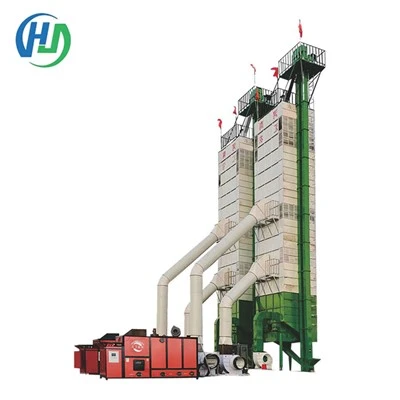
If you’re looking to upgrade your drying machinery, troubleshoot inconsistent temperature control on your current line, or learn more about how our systems are built to handle your specific product, reach out to discuss your needs. We work with small batch operations and large industrial facilities alike, and every solution we design puts reliable, precise temperature control at its core.
Rice Processing Equipment References
- “Industrial Drying: Principles, Applications, and Design” by A.S. Mujumdar, CRC Press, 2014
- “Temperature Control in Industrial Convection Dryers” Journal of Food Engineering, Vol. 18, No. 3, 1992
- “Pharmaceutical Drying Technology: Principles and Practice” by S. Shamim, Elsevier, 2020
- “Energy Efficiency in Heat Pump-Assisted Drying Systems” Applied Thermal Engineering, Vol. 115, 2017
Henan Huinong Machinery Co., Ltd.
Henan Huinong Machinery Co., Ltd. is one of the most professional drying machinery manufacturers and suppliers in China, featured by quality products and low price. Please rest assured to buy discount drying machinery from our factory. We also accept customized orders.
Address: No.6, Northeast Corner of the Intersection of Renmin Road and Zhujiang Road, New District, Huaxian County, Henan Province
E-mail: frank.tang@huinongmachinery.com
WebSite: https://www.huinongmachinery.com/
