If you’ve ever worked in metal fabrication, construction, or automotive manufacturing, you know how critical a round bar cutting machine is to keeping production lines moving. As a supplier of these machines, I’ve spent countless hours on job sites, talking to operators, maintenance teams, and production managers who run these tools day in and day out. And while there’s no doubt that a good round bar cutting machine can slash manual labor costs, cut to tight tolerances, and deliver consistent results, it’s not a one-size-fits-all solution. In fact, every machine has hard limits—some obvious, some easy to overlook until you’re mid-production. Let’s break down the most common limitations I see, straight from the conversations I have with customers. Round Bar Cutting Machine
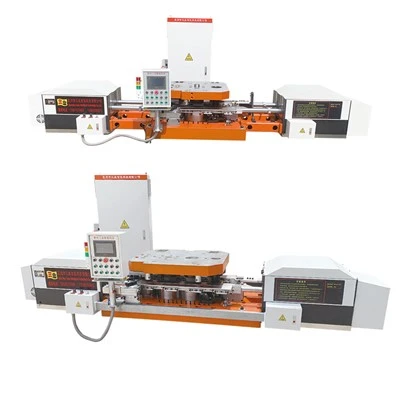
First off, size and material capacity constraints. This is the most upfront limitation, but it’s still the one that catches new operators off guard most often. Most standard round bar cutting machines are designed for a specific range of bar diameters, usually between 6mm and 150mm for models I supply. Try to cut a bar thicker than that, and you’re not just going to get a rough cut—you might damage the machine’s blade, motor, or even its structural frame. Last year, a small structural steel shop reached out to me because their machine kept snapping high-speed steel blades when they tried to cut 180mm diameter steel round bars. Their initial thought was the blade was low quality, but after checking their machine’s specs, it was clear they’d bought a model rated for smaller bars. We ended up referring them to our heavy-duty line, which has a reinforced blade housing and 10HP motor, but that doesn’t change the fact that the standard model’s capacity is a hard line. It’s not just diameter, either—material density matters. If you’re cutting high-alloy steels like tool steel or titanium, even a bar within the advertised diameter range will put more strain on the machine than mild steel. Operators often push their machines beyond material weight limits to avoid extra work, and that leads to more breakdowns and longer-term wear.
Next comes tolerance limits. Precision is half the battle with cutting round bars, especially for parts that will be welded together or fit into tight assemblies. Most standard round bar cutting machines can hold a tolerance of ±0.25mm per cut, but that’s only under ideal conditions—dry bars, sharp blades, a level worktable, and consistent feed speed. If you’re dealing with a machine that’s been running for years without calibration, that tolerance can jump to ±0.5mm or more. And forget about holding tighter tolerances, like ±0.1mm, with a standard machine. That requires a CNC-controlled cutting system with automatic blade adjustment, a feature that’s only included in our premium line for high-precision manufacturing. I’ve had a few aerospace component suppliers ask if our standard machines can hold tolerances tight enough for turbine parts, and I always be honest: no, not without upgrading to the CNC model. Cutting beyond a machine’s tolerance limit doesn’t just mean reworking parts—it can lead to costly assembly errors down the line, too.
Then there’s blade wear and replacement, which is a hidden ongoing limitation that many new customers don’t account for. Round bar cutting machines rely on high-speed steel (HSS) or carbide-tipped blades, and how long those blades last depends entirely on the materials you’re cutting, how often you run the machine, and how well you maintain it. For mild steel, a good blade can last 800 to 1,000 cuts, but for high-alloy steel, that number drops to 300 or less. And when a blade wears down, it doesn’t just give a rough, uneven cut—it can bend the round bar, cause the machine to vibrate excessively, and even damage the workpiece if the blade breaks mid-cut. The problem is that blade replacement isn’t just a part cost; it’s also downtime. Each time you swap a blade, your production line stops, which adds up over a month of 10-hour shifts. Some operators try to save money by using lower-quality blades, but that just makes the problem worse—blades dull faster, break more often, and lead to more material waste. It’s a limitation that ties into both cost and workflow, and it’s one that’s hard to plan for if you don’t have a clear maintenance schedule.
Environmental and work site limitations are another big one, especially for smaller job sites that don’t have the space or power for a heavy machine. Most standard round bar cutting machines weigh between 500 and 1,200 kg, and require a dedicated 220V power outlet—some heavy-duty models even need 480V three-phase power. If a shop is set up in a small workshop with limited power, or they need to move the machine between job sites (like a construction crew that works on multiple locations), a fixed heavy-duty model isn’t practical. I once worked with a mobile fabrication team that needed to cut bars on job sites across the city, and our fixed large-capacity machine was too heavy to transport. We ended up suggesting our portable round bar cutting machine, which is half the weight and runs on a 110V outlet, but it has a smaller capacity. The tradeoff for portability is definitely size, so that’s a limitation anyone looking at a round bar cutting machine has to consider. Even indoor workshops with poor ventilation will run into issues, too. Cutting round bars generates metal shavings, dust, and noise—excessive noise, usually around 85 decibels for standard models, which is above the OSHA recommended limit for 8-hour shifts. Without proper noise reduction or dust collection, that can lead to compliance issues for small shops, or require extra investment in safety equipment for operators.
Wait time for material setup is another underdiscussed limitation. A round bar cutting machine might be fast at making cuts, but the time it takes to prepare a bar, set its length, clamp it into place, and align it is where bottlenecks happen. Most manual machines require an operator to measure each bar, mark the cut line, adjust the clamping pressure, and feed the bar through the blade. Even for an experienced operator, that takes 2 to 3 minutes per bar—compared to 10 seconds with an automatic feeding system on a CNC model. That’s a huge difference in production rate. Last quarter, a customer in the agricultural parts sector told me that their 10-operator team was waiting an average of 2 hours a day for their machine to prep and cut bars, which cut their weekly output by 15%. We worked with them to add an automatic bar loader to their machine, but that upgrade didn’t fix the manual measurement and marking part of the setup process. For shops running high-volume batches, that setup time limit is a major factor in overall efficiency.
And let’s not forget about material waste. When you cut a round bar, each cut leaves a small amount of scrap material at the ends—usually around 5mm to 10mm, depending on the blade thickness. Multiply that by 10,000 cuts a year, and that’s 50 to 100 meters of scrap bar that can’t be reused. But the bigger waste comes from the machine’s inability to cut to non-standard lengths or irregular shapes. Standard round bar cutting machines are designed for straight cuts along the axis of the bar, so you can’t cut a tapered end, a threaded section, or a notched end without extra processing. For example, if you need a round bar with one end tapped for a bolt, you have to cut the bar to length first, then send it to a threading machine—adding two steps and more waste. Some specialized machines can do these secondary cuts, but they’re expensive and not an option for most standard models. That’s a limitation that adds up in both time and material costs, especially for custom orders with varying part shapes.
As a supplier, I don’t bring these limitations up to talk down our machines—far from it. I bring them up because the biggest mistake customers make is buying a round bar cutting machine without fully understanding their own production needs. A machine that works perfectly for a large steel fabricator running 10,000 mild steel bars a month might be terrible for a small custom shop making 50 high-alloy bars a week. The key is to match the machine’s limitations to your workflow, not the other way around.
For example, if you’re a small construction crew that needs to cut 50mm to 100mm bars on job sites, a portable, mid-capacity model is the right choice—even if it can’t handle 150mm bars. If you’re a high-volume automotive shop cutting thousands of small mild steel bars, the automatic feeding system is worth the extra cost to beat setup time limits. The last thing any of us want is for a customer to be disappointed because their machine isn’t built for the work they’re doing.
If you’re in the market for a round bar cutting machine, I encourage you to think beyond just the initial price tag. Ask yourself: what’s the maximum diameter and material I’ll be cutting regularly? What tolerance do my parts need? Do I have the power and space for a heavy machine, or do I need something portable? How much downtime can I afford for blade replacements or maintenance? These questions will help you avoid falling into the trap of assuming all round bar cutting machines are the same.

When you’re ready to walk through your specific needs, reach out to discuss how we can tailor a solution that fits your operations. Every customer’s workflow is unique, and a machine’s limitations don’t have to be dealbreakers—they’re just factors to plan for. With the right information, you can find a machine that boosts productivity, cuts costs, and works for your business, not against it.
Bearing Ring Former References
- Industrial Machinery Association. (2022). Guidelines for Round Bar Cutting Machine Capacity and Application.
- OSHA. (2021). Noise and Ventilation Standards for Metal Fabrication Equipment.
- Journal of Manufacturing Processes. (2020). Tolerance Limits for Mechanical Cutting of Ferrous and Non-Ferrous Bars.
- Metalworking News. (2023). Cost Analysis of Blade Replacement and Downtime for Cutting Machines.
Quanzhou Sanye Intelligent Technology Co., Ltd.
As one of the most professional round bar cutting machine manufacturers and suppliers in China, we have world-leading production equipment and strong manufacturing capabilities. Please rest assured to buy customized round bar cutting machine made in China here from our factory. Welcome to contact us for quotation.
Address: Anhai Town, Jinjiang City, Fujian Province, China
E-mail: jack_tmm@163.com
WebSite: https://www.qzsymanipulator.com/
