If you’ve ever stood in a lab or a manufacturing workshop staring at a piece of test gear, you’ve probably wondered: is this analog or digital? And does it even matter for the work I do? As a test instrument supplier, I get this question all the time—usually from folks choosing gear for a prototype build, a production line, or a quality control check. Let’s break this down like we’re chatting over coffee, no stuffy jargon, just straight talk on how these two types of instruments actually differ, and why that matters for your operations. Testing Instrument
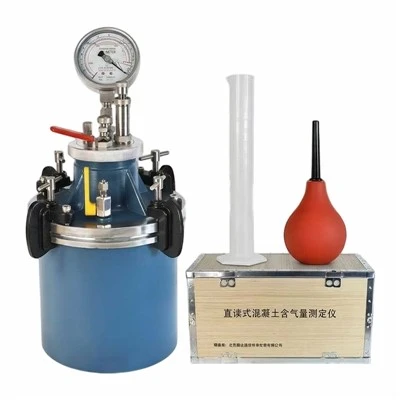
First, let’s get the basics right. Analog instruments work with continuous physical signals—think voltage, current, temperature, or pressure that varies smoothly, not in chunks. A classic example is an old analog multimeter with a needle that swings across a scale, or a mercury thermometer where the silver liquid rises down a glass tube. Digital instruments? They turn those same physical signals into binary (0s and 1s) that computers and microchips can read, then display that data as numbers on a screen instead of a moving needle. That core difference—continuous vs. binary data—ripples through every single part of how these instruments perform, cost, and fit your needs.
Let’s start with accuracy, because that’s usually the first thing people care about. Analog instruments rely on mechanical parts: springs, gears, needles, or moving coils. Those parts wear out over time, get out of alignment if you drop the tool, or get thrown off by temperature changes in the room. I’ve seen a workshop’s analog pressure gauge off by 15% after a year of being moved around, just because the needle’s pivot got a little dusty. Digital instruments, on the other hand, sample the signal thousands of times a second, convert it to digital code, and process it with calibrated circuits. No moving parts to slip—so as long as they’re calibrated right out of the box and you keep up with annual checks, their accuracy stays consistent. Sure, digital gear can have small rounding errors from how many “bits” it uses to sample, but for most industrial or lab work, that’s way smaller than the drift you get with analog.
Next, ease of reading and human error. Let’s be real: reading an analog scale is not as easy as it sounds. If the needle lands between two lines on a voltmeter, you have to guess where exactly it falls—each person might get a slightly different number, leading to inconsistency. I once had a customer at my shop tell me their QC team was rejecting perfectly good parts just because two different inspectors read the same analog gauge and came up with slightly different measurements. Digital instruments spit out a clear, precise number—no guessing, no personal bias. That cuts down on human error big time. Plus, digital screens can show extra info at a glance: not just the current reading, but min/max values, real-time trends, or even alerts if a measurement is out of spec. Analog gauges can’t do that—they just show a single number at a time, and you have to mark down values manually.
Wait, but analog gear has its perks too, right? I don’t want to act like digital is the only way, because that’s not true. For super low-bandwidth, simple measurements, analog instruments are often way cheaper and more rugged. Let’s say you just need a quick check of a car’s battery voltage on the side of the road—an analog multimeter is light, doesn’t need batteries (most run on the power of the signal you’re testing), and works even if it’s rained on a little. I’ve seen digital meters die mid-test because their batteries died, or they couldn’t handle the cold of a winter jobsite. Also, some people trust analog gear because it gives a visual, physical cue—like a needle that dips if a circuit is overloaded, so you can see a problem happen in real time without waiting for a screen to load. That’s why some technicians still keep an analog gauge in their toolbox for fast, on-the-spot checks.
Now let’s talk about functionality and integration, which is where digital instruments blow analog out of the water. Modern digital test gear doesn’t just measure a value—it can log data over time, connect to your company’s network or quality control software, and even trigger automated actions. For example, if you’re testing parts on a production line, a digital tensiometer can send a reading straight to your ERP system, log every measurement for traceability, and stop the line automatically if tension is too high or too low. Analog instruments can’t do any of that. They might have a way to output a signal, but it’s usually a basic, uncalibrated one that you have to wire into a separate logger—no seamless integration. That’s a huge deal for factories that need to meet ISO standards or track every part’s history.
Ruggedness is another angle, but it’s not as straightforward as you’d think. Analog gear’s moving parts make it fragile—drop a mechanical pressure gauge, and the needle might bend or the spring break. Digital instruments, if they’re built right, can take a beating because their only moving parts are buttons or ports. But wait, digital gear still needs power—so if you’re working in a remote location with no outlets, or your battery dies, a digital meter becomes useless. Analog gear runs on the signal itself, so it can work indefinitely as long as the physical parts hold up. I’ve had customers working on off-grid renewable energy projects tell me they keep a analog multimeter as a backup, just in case their digital tool dies halfway through a solar panel test.
Cost is probably the biggest deciding factor for most small businesses or hobbyists. Basic analog instruments are super cheap—you can pick up a $10 analog multimeter at any hardware store, no fine print. Entry-level digital meters start around $20, but the good ones with data logging and integration can run a few hundred dollars. For simple, one-off measurements, analog saves you upfront cash. But if you’re doing repeat tests, tracking data, or need precise measurements for production, the higher cost of digital pays off quickly in less rework, fewer rejected parts, and faster work. I had a small electronics startup come to me last year—they were using analog multimeters for their prototype tests, and they were wasting 10 hours a week rechecking measurements because of human error. Switched to digital, and that time dropped to 2 hours a week. That’s a no-brainer for them.
Calibration is another area where they differ, and it’s something you can’t ignore. Both analog and digital instruments need regular calibration to stay accurate, but the process is different. Analog calibration is more hands-on: you have to adjust the needle, align the scale, and test multiple points to make sure it’s reading correctly. It’s more labor-intensive, so it costs more to service an analog meter. Digital calibration is usually done with software updates and precise reference signals—you can even do it in-house with a standard reference source, as long as your team knows how. That makes digital instruments easier and cheaper to maintain over their lifetime.
Wait, let’s get real about common myths. Some people say analog is “more reliable” because it doesn’t have a battery or microchips, but that’s only true for very simple use cases. A digital multimeter with a solid-state design can last 10+ years if you take care of it, just like an analog one. The myth comes from old digital gear that had buggy chips or bad battery life—modern digital instruments are built to be tough, with sealed cases and low-power modes for long battery life. I’ve had a digital temperature sensor I supplied to a customer last year that ran on a single AA battery for 18 months straight—way longer than any analog gauge would hold up if it got banged around.
So when should you pick which one? Let’s run through quick scenarios: if you need fast, cheap, no-fuss checks for small jobs, analog is fine. If you need precise, repeatable measurements, data tracking, integration with your existing systems, or to minimize human error, go digital. A lot of my customers don’t have to choose—they keep both. An analog multimeter in the truck for on-the-spot battery checks, and a digital multimeter with data logging for QC checks on production parts. That way, you get the best of both worlds.
Now, here’s the thing: every workshop, lab, or project has unique needs, so there’s no one “right” answer. That’s why I work with customers to figure out exactly what they’re testing, how often, and what they need the data for, instead of just pushing one type of gear. If you’re tired of dealing with inconsistent readings, wasting time on manual data entry, or having analog tools drift out of calibration mid-job, let’s chat. We can walk through your specific use case, compare options, and pick the instrument that fits your budget and your work.
If you’ve got questions about analog vs. digital gear, or need help picking the right test instrument for your next project, reach out—we’re here to make sure you get tools that work for you.
Cement Testing Instrument References
- Doebelin, E. O. (2004). Measurement Systems: Application and Design. McGraw-Hill Education.
- Beckwith, T. G., Buck, N. L., & Marangoni, R. D. (2006). Mechanical Measurements. Pearson Education.
- International Organization for Standardization (ISO). (2010). ISO 17025: General Requirements for the Competence of Testing and Calibration Laboratories.
- Taylor, J. R. (1999). An Introduction to Error Analysis: The Study of Uncertainties in Physical Measurements. University Science Books.
Hebei Wanluda Testing Instrument Equipment Co., Ltd.
As one of the most professional testing instrument manufacturers and suppliers in China, we have world-leading production equipment and strong manufacturing capabilities. Please rest assured to buy advanced testing instrument made in China here from our factory.
Address: Zhouguantun Village, Xian County, Cangzhou City, Hebei Province, P.R.China
E-mail: wldinstrument@163.com
WebSite: https://www.wldinstrument.com/
