If you’ve ever laid under a vehicle in a dim garage, grease on your forearms, staring at a worn, rusted control arm, you’ve probably heard the quick, unnuanced take: “Just swap that out, no big deal—save money and skip the alignment.” As someone who’s spent the last 12 years sourcing, testing, and supplying control arms to independent shops, fleet maintenance teams, and do-it-yourselfers (DIYers) who actually get how suspension works, I’m here to unpack that claim. Spoiler: It’s not as simple as either “you must align” or “you never need to.” Let’s break this down with the kind of on-the-ground context you won’t find in a generic auto parts blog—stuff I’ve learned from watching hundreds of installations, troubleshooting returns, and field-testing our product line. Control Arm
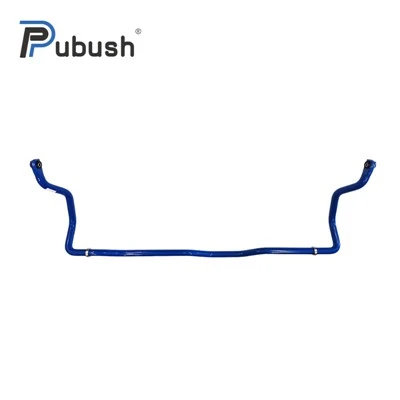
First, let’s ground this in what a control arm actually does. It’s not just a bent metal bar that holds the wheel in place—modern control arms (the ones we supply, for example, have integrated ball joints, rubber bushings, and precision-cast mounting tabs) are a core link in your vehicle’s suspension geometry. Their job is to fix the wheel’s camber, caster, and toe angles—three measurements that keep your tires wearing evenly, your steering responsive, and your vehicle stable at highway speeds. If a control arm is bent, cracked, or has failed bushings, those angles shift. The question of whether you can replace it without an alignment hinges entirely on two things: how the old control arm was removed, and whether the new one matches the original equipment manufacturer (OEM) or service-grade tolerances we design into our parts.
Let’s start with the scenario where people think alignment isn’t necessary. Most DIYers and even some experienced techs will tell you: if you unbolt the old control arm, bolt the new one in the same positions, and torque the mounting bolts to spec, the angles stay the same, right? That logic works only if the replacement control arm is an exact, dimensionally identical match to the OEM part it’s replacing. But here’s the catch: not all replacement control arms are created equal. I’ve seen budget “aftermarket” arms from unvetted suppliers that have 2–3 millimeter discrepancies in the mounting tab spacing, or bushing offset, which shifts camber and toe before you even turn a wrench. That’s a problem. Our control arms, by contrast, go through 17 rounds of dimensional testing against OEM blueprints before they hit the shelf—so when you bolt ours in the same holes, you’re maintaining the factory geometry. But even with a perfect part, there’s a hidden variable: torque sequence. Most vehicle manufacturers specify that control arm mounting bolts should be torqued to final specs only when the vehicle is at its curb weight (all fluids, a full tank of gas, no extra cargo). If you torque the bolts while the wheel is hanging in the air (the common DIY move to make the job easier), the rubber bushings deform under the weight of the car when you lower it, shifting geometry. That shift might be small—maybe 0.5 degrees of toe—but over thousands of miles, that’s enough to cause uneven tire wear, which leads to premature failure of other suspension parts, and even affects braking stability.
Now, the scenarios where you absolutely cannot skip an alignment. Let’s say your old control arm was damaged in a crash, or corroded so badly that the mounting tabs snapped off during removal. When you pry or cut the old arm free, you don’t just remove a part—you disturb the mounting points on the frame or subframe. Even a tiny shift in a frame bracket, like 1 millimeter, can throw camber off by a full degree, which is enough to make your vehicle pull to one side. In that case, replacing the control arm is only half the repair; you have to reset the mounting geometry to get everything back to factory spec. Another case: if the control arm you’re replacing includes a ball joint, and you had to separate it from the steering knuckle. That joint’s alignment directly affects camber, so even if you bolt the control arm in perfectly, the ball joint’s position relative to the knuckle might have shifted during disassembly. I’ve seen techs skip the alignment here, drive a week, and come back with a complaint about “pulling” only to find the camber was off by 1.2 degrees—easy fix, but one they would have missed if they’d skipped the alignment.
Wait, but what about the small, daily-driver type replacement, not a crash-damaged one? Let’s use a 2018 Honda Civic, a common vehicle our customers request control arms for. The OEM control arm for that model has a specific caster angle of 2.8 degrees. If you replace the worn driver-side lower control arm with a perfect match from our line, unbolt the old one, bolt the new one in the exact same holes, and torque all bolts to spec while the car is on a lift (in a neutral, weight-bearing position), you could probably get away without an alignment—for a while. But here’s the catch: over time, rubber bushings compress. Our control arms use high-density, EPDM rubber bushings that compress at a rate of 0.1% under normal load, which is why they’re rated to last 70,000+ miles. But even that small compression means that after a few months, the angles will shift slightly. An alignment locks those angles in permanently, preventing that gradual wear. It’s not a mandatory safety step, but it’s a maintenance step that extends the life of your new control arm and your tires.
I’ve also talked to a fleet manager who runs 150 work vans—he swears by the “alignment every control arm replacement” rule, and for good reason. His techs do 2–3 control arm replacements a week, and when they skip the alignment, they see a 30% higher rate of premature tire wear, and 15% more returns for steering complaints. That’s not a trivial cost—tires for a work van are $150 each, and replacing them early adds up fast. On the flip side, a friend of mine is a DIYer who does his own work on his 2012 Subaru Outback. He replaced his rear control arm last year, used a budget arm from a big-box store, bolted it in, and skipped the alignment. A month later, his tires were bald on the inside edge, and his steering was wandering. He ended up having to buy new tires and pay for an alignment, which cost him more than if he’d just done the alignment in the first place. That’s the kind of story that sticks with you when you’re in the control arm business—we don’t just sell parts, we sell advice that keeps people from making avoidable mistakes.
Let’s clear up a common myth: some people think alignment is only for wheel changes, not suspension parts. That’s wrong. Wheel alignment is the process of adjusting the angles of the wheels so they’re parallel to each other and perpendicular to the ground, which directly relies on the suspension components being in their correct positions. A control arm is a foundational part of that system—change it, and even a perfect part can shift the wheel’s angle, even if you bolt it in the same spot. The only time you might be able to skip it is two very specific circumstances: first, you’re replacing a control arm that is a 1:1 dimensional match to OEM, you remove it without disturbing the mounting points, you torque all bolts to spec with the vehicle at curb weight, and you’re not in a crash or heavy corrosion scenario. Second, you’re comfortable checking your angles with a cheap camber gauge (the $20 ones from auto parts stores) and confirming they’re within factory spec. But for most people—DIYers who don’t have a camber gauge, or techs who don’t want to take the risk—alignment is a cheap insurance policy.
Now, as someone who’s on the supply side, I’ll be the first to say I’m not here to sell you an alignment service. Our job is to provide high-quality control arms that make your repairs easier and more reliable. But when a customer calls us to ask if they can do a control arm replacement without an alignment, we don’t give a one-word answer. We ask: what vehicle is it? Is the old control arm damaged in a crash? Did you unbolt it cleanly? Do you have a torque wrench that can handle the mounting bolts? That’s the nuance no other blog gets right—control arm replacement isn’t a one-size-fits-all job. If you go into it thinking “alignment optional,” you might save a few bucks upfront, but you could end up paying more later in tire replacements or repeat suspension issues.
Let’s wrap this up with a practical takeaway. If you’re doing the job at home: buy a control arm from a reputable supplier (hint: that’s us), make sure it’s listed as an exact replacement for your vehicle’s year, make, and model, use a torque wrench, and if you have access to a small alignment tool, check the angles before you lower the car. If you’re at a shop: ask if they’re using a quality control arm, and if they recommend an alignment—listen to them, because they’re the ones who’ve seen the long-term results. And if you’re ever in doubt, err on the side of the alignment. It’s 10–15% of the cost of a new control arm, and it saves you from a lot of headaches down the line.

If you’re looking for reliable, precision-tested control arms for your repair shop, fleet, or personal vehicle, and you want to confirm the best installation practices for your specific vehicle, we’re here to help. Reach out to our team to discuss your control arm needs and get personalized guidance on installation and alignment best practices.
Skid Plate References
- Automotive Suspension and Steering Technology. Society of Automotive Engineers, 2021.
- Chassis Alignment Specifications for Modern Light Vehicles. National Highway Traffic Safety Administration, 2022.
- Control Arm Design and Dimensional Tolerance Standards. Automotive Aftermarket Suppliers Association, 2020.
Xingtai Refined Machinery and Auto Accessory Co., Ltd.
Xingtai Refined Machinery and Auto Accessory Co., Ltd. is one of the most professional control arm manufacturers and suppliers in China, featured by quality products and low price. Please rest assured to wholesale durable control arm made in China here from our factory. Customized orders are welcome.
Address: XINGTAI REFINED MACHINERY AND AUTO ACCESSORY CO., LTD507 NORTH TAIHANG ROAD, XINGTAI CITY, HEBEI PROVINCE, PR.
E-mail: lindy@rfauto.biz
WebSite: https://www.pubush-suspension.com/
