Hey guys, if you’ve ever stopped to think about how that crisp, clean water you use every day — whether it’s for drinking, mixing lab samples, or even manufacturing sensitive electronics — gets so pure, you’re not alone. As a pure water system supplier, I get asked this question all the time: “How does a pure water system actually remove all the yucky stuff from regular tap water?” It’s not just some magic trick, promise. It’s a step-by-step process that’s been refined over decades, and today I’m gonna break it down in plain English (no science jargon overload, I swear). Pure Water System

First off, let’s set the scene: regular tap water isn’t just H2O. It has all kinds of impurities floating around — things like sediment from pipes, chlorine used to kill bacteria, heavy metals (hello, lead and copper), dissolved minerals, tiny microorganisms like bacteria and viruses, and even organic compounds from farming or industrial runoff. A good pure water system doesn’t just get rid of one or two of these; it targets almost everything, depending on how pure you need it to be. We’ve got different tiers, too — like for basic drinking water vs. ultra-pure water used in semiconductor manufacturing, but the core process follows the same flow.
Let’s start with the first step: pre-treatment. You can’t just throw tap water straight into the fancy purification parts — that would wear ’em out way too fast. Think of pre-treatment like a security guard at the door, kicking out the big troublemakers first. The biggest thing here is sediment filtration. Most systems use a spun polypropylene filter — basically a thick, porous plastic that catches dirt, rust, and tiny sand particles. If you’ve ever changed a shower filter, it’s kind of like that, but bigger. Some pre-treatment stages also include activated carbon filters. Those are the black, granulated filters you might see in under-sink units, and they work by adsorption — not absorption, important difference! Adsorption means the carbon’s tiny pores grab onto chlorine, bad tastes, and volatile organic compounds (VOCs) like pesticides. That’s why your water doesn’t smell like a swimming pool after going through pre-treatment.
Next up, after pre-treatment, we move to the big one for most pure water systems: reverse osmosis (RO). This is the part that’s like a super fine sieve — way finer than anything you could make at home. Let me explain: normally, water flows from an area with less dissolved stuff to more, right? That’s osmosis. Reverse osmosis reverses that using pressure. We push water through a semipermeable membrane that’s so tiny, it only lets H2O molecules pass through. Everything else — salts, heavy metals, bacteria, even most viruses — is too big to fit through the membrane pores. Like, the pores are about 0.0001 microns, which is a thousand times smaller than a red blood cell. For context, a human hair is like 50,000 microns wide. So yeah, that membrane is basically a super-tiny net that catches almost all the remaining impurities after pre-treatment.
Wait, but RO alone isn’t enough for ultra-pure water, which is what a lot of our industrial clients need (like biotech labs or electronics factories). That’s where deionization (DI) comes in. DI is like the final polish for minerals. You know how tap water has things like calcium, magnesium, and sodium dissolved in it? Those are ions — tiny charged particles. DI uses resin beads, usually mixed bed resins (cation and anion), that attract and grab onto those ions. Cation resins grab positive ions like calcium, and anion resins grab negative ones like chloride. When the water flows through the resin, almost all the dissolved minerals are swapped out for hydrogen and hydroxide ions, which combine to make pure H2O. Eventually, those resin beads get full of impurities, so you have to regenerate them — usually with a salt solution, but we make sure that’s a closed loop system so nothing extra gets back into the water.
Oh, and we can’t forget about disinfection, even after all that. Because even with RO and DI, there’s still a tiny chance of microorganisms hanging around, especially if the water sits in the system pipes for a bit. A lot of our systems use UV sterilization here — ultraviolet light with a specific wavelength (254 nm) that breaks the DNA of bacteria, viruses, and mold so they can’t reproduce. No chemicals needed, just light. That’s way better than adding more chlorine, which can leave a residue. Some systems also have ultrafiltration (UF) membranes, which are a step up from RO, catching even smaller particles like viruses and endotoxins — super important for medical or lab-grade water.
Wait, let me make this real for you. A few months back, I had a client who runs a local craft brewery. They needed pure water to make their beer consistent, right? Their tap water had high mineral content that made their beer taste off. We installed a system with pre-filters, RO, DI, and UV. Now their water is so pure, they don’t have to adjust as many batches, and their repeat customers are going crazy over the consistent flavor. Another client is a semiconductor shop — they need water so pure, it has almost zero dissolved solids, because even a tiny mineral particle can ruin a microchip. Their system uses UF, RO, DI, and even a final polish with electrodeionization (EDI), which is like a more advanced DI that uses electricity to regenerate the resins without chemicals — way more eco-friendly.
I get it, some people might worry about cost or maintenance, but modern pure water systems are way easier to keep up than they used to be. The filters only need changing every 6 to 12 months, depending on your water source, and the membranes last 2 to 3 years. We offer support to our clients, too — not just selling the system, but helping them set it up, do regular checks, and troubleshoot if something goes wonky. No one wants their pure water system to stop working when they’re in the middle of a big order or a lab experiment, right?
Let me clear up a common myth, too: a lot of people think “pure water” means totally zero minerals, but that’s not always the case. For drinking water, some people like mineral water, but our pure water systems can be calibrated to leave a small amount of beneficial minerals if that’s what you want. It just depends on the end use. For industrial or lab use, though, we need as close to zero impurities as possible, so we go through those extra steps like EDI or UV.
Another thing I should mention: water quality testing. A good pure water system isn’t a set-it-and-forget-it thing. We recommend testing the water periodically to make sure the impurities are being removed. We can help you set up a testing schedule, and even provide easy test strips or send samples to a lab if you need. That way, you know your system is doing its job — no guesswork.
So putting it all together, the process is: pre-treatment to kick out big stuff and chemicals, reverse osmosis to catch almost all dissolved impurities, deionization (or EDI) to finish off minerals, and UV/UF to kill any remaining microorganisms. It’s a combination of physical barriers, chemical attraction, and light disinfection. No single step does all the work, which is why a well-designed system is key.
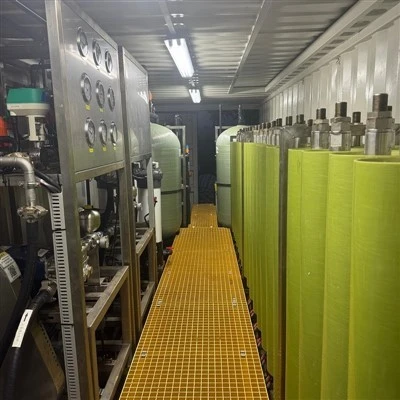
I know this stuff can seem complicated at first, but at the end of the day, it’s just about making water clean enough for whatever you need it for. If you’re thinking about adding a pure water system to your home, brewery, lab, or factory, I’d love to chat. Whether you’re not sure what tier you need, have questions about maintenance, or want a custom solution for your space, we’re here to help. Don’t hesitate to reach out — we’ve helped tons of clients get the pure water they need, and we can do the same for you.
Disc Tube Membrane References
- American Water Works Association. (2018). Water Treatment Principles and Design. McGraw-Hill Education.
- International Organization for Standardization. (2020). ISO 3696: Water for analytical laboratory use – Specification and test methods.
- Crittenden, J. C., et al. (2012). Water Treatment: Principles and Design (3rd ed.). John Wiley & Sons.
- World Health Organization. (2011). Guidelines for Drinking-water Quality (4th ed.).
- Semiconductor Industry Association. (2019). Ultrapure Water Systems for Semiconductor Manufacturing.
Hangzhou Nanoimp Environmental Technology Co., Ltd.
With abundant experience, we are one of the most professional pure water system manufacturers and suppliers in China. Welcome to wholesale high quality pure water system in stock here and get pricelist from our factory. We also accept customized orders.
Address: Road 25, Baiyang Street, Qiantang District, Hangzhou City, Zhejiang Province
E-mail: lena.hu@nano-sepmer.com
WebSite: https://www.nanoimp-membrane.com/
