Hey there, let’s cut to the chase—if you’re working with MDF wall panels, one of the first questions that pops up (especially when you’re sourcing for a renovation, commercial build, or even a small DIY project) is about standard sizes. As someone who’s been supplying MDF wall panels for over a decade now, I’ve lost count of how many times contractors, interior designers, and even homeowners hit me up asking, “Wait, what’s actually standard here?” So let’s break this down straight, no corporate jargon, just the real stuff we deal with day-to-day. MDF Wall Panel

First off, let’s clarify: MDF (Medium-Density Fiberboard) wall panels aren’t one-size-fits-all, and there’s a reason for that. The “standard” size depends on where you are (US vs. EU vs. other regions matter), the type of panel you’re grabbing (solid MDF vs. veneered vs. primed for painting), and even how you plan to install them. But let’s start with the most common ones everyone refers to, because that’s what you’ll find at your local supplier or big-box store more often than not.
In North America, the go-to standard for full-size MDF sheets that get cut down into wall panels is 4 feet by 8 feet. Yeah, that’s 48 inches wide and 96 inches tall, for anyone who works in imperial units. Wait, but hold on—wall panels aren’t always full sheets, right? Most of our customers don’t mount a 4×8 sheet directly on a wall unless it’s a straight, unbroken feature wall. More often, they’re looking for pre-cut panels that fit into standard stud spacing. Oh, right, standard wall studs are 16 inches apart on center (that’s the most common, 24 inches is also pretty big) so a lot of suppliers offer pre-cut panels that are 48 inches wide—perfect for spanning three studs (16×3 = 48) without needing a seam. That’s a huge win, because seams are one of the biggest headaches with wall paneling; less of them means less sanding and caulking later.
Then there’s the thickness, which is just as important as width and height if you want a finished look. For wall panels, the standard thicknesses we see moving off our shelves are 1/2 inch and 5/8 inch. Why those? 1/2 inch is lightweight enough for DIYers to handle alone, easy to cut with a circular saw or even a jigsaw, and rigid enough for most interior walls. 5/8 inch is a step up—sturdier, less prone to warping if your space has a bit of humidity (like a bathroom that’s used often, or a basement with mild dampness), and it holds nails better so trim pieces won’t pop off down the line. We also stock 1/4 inch panels for things like wainscoting accents or decorative trim, but that’s more of a specialty size, not the go-to standard for full wall coverage.
Now, if you’re across the pond in the EU or UK, the numbers shift a little to metric, obviously. The standard full MDF panel size there is 1220mm by 2440mm, which is basically the equivalent of the North American 4×8 sheet (close enough for most projects). But the pre-cut wall panel size that’s standard over there? A lot of suppliers do 1200mm width, which again aligns with their stud spacing (usually 400mm on center, so 1200mm spans three studs). Thicknesses are similar too—12mm and 15mm are the common standards for wall panels there, which translates to roughly 1/2 inch and 5/8 inch if you do the conversion.
Wait, but let’s not forget that “standard” can vary a little by what type of MDF panel you’re talking about. Like, primed MDF panels (the ones that are prepped so you can just paint them without sanding the raw MDF grain) often come in the same sizes as raw MDF, but sometimes we’ll do custom 8×4 panels for commercial clients who are doing large-scale offices or retail spaces. Veneered MDF panels, which have a wood finish (oak, walnut, birch) instead of being raw or primed, also stick pretty close to standard sizes because cutting veneer to non-standard dimensions is a waste of material, and that would jack up the cost.
Now, let’s talk about why this actually matters for you, not just random numbers. If you’re a contractor, using standard sizes means you don’t have to waste time ordering custom cuts, waiting for them, or paying extra for rush cuts. I’ve had a customer before who tried to order 50 panels cut to 50 inches wide instead of the standard 48, and his supplier hit him with a 30% surcharge because they had to adjust their machinery for a non-standard size. That’s the kind of extra cost you want to avoid if you’re on a tight budget.
For DIYers, standard sizes mean you can pick up extra panels from any local hardware store if you mess up a cut halfway through a project. I’ve seen so many DIYers panic when they cut a panel wrong and realize the store down the street only carries standard sizes—if you’d gone with standard, you’d just run in and grab another one in 10 minutes, no delay.
But wait, are there exceptions? Absolutely. If you’re doing a statement wall with a unique layout, like vertical panels or a staggered pattern, you might go with narrower panels, like 12 inches or 24 inches wide. That’s totally fine, that’s just a design choice, not the standard. Or if you’re doing a ceiling paneling project, you might go with thinner 1/4 inch panels, but again, that’s not the wall panel standard we’re talking about.
Also, a quick note on quality—just because a size is standard doesn’t mean all MDF panels are the same. As a supplier, I make sure our standard size panels are made with low formaldehyde resin (we stick to CARB Phase 2 standards, which is big for indoor air quality) and have a smooth face so you don’t see those weird rough spots when you’re done installing. A lot of cheaper suppliers will cut corners on the core, so their standard size panels warp after a few months, which is a nightmare.
Now, if you’re wondering how to measure for your project once you know the standard sizes, here’s a quick pro tip: measure your wall’s total width, then divide by the standard panel width (either 48 inches or 1200mm) to see how many panels you’ll need. Add 10% extra for cuts and mistakes, that’s non-negotiable. For example, if your wall is 14 feet wide, that’s 168 inches. Divide by 48 inches per panel, you get 3.5—so you’ll need 4 panels, plus 1 extra for cuts, that’s 5 total. That’s way easier than cutting custom sizes mid-install.
I get it, sometimes you might have a weirdly sized wall (like an old house with non-standard stud spacing) and standard sizes just won’t work. That’s where custom cutting comes in, and as a supplier, we offer that too—no matter the size you need, we can cut MDF wall panels to whatever dimensions you want, as long as it’s within reason. But for 90% of residential and small commercial projects, the standard sizes I mentioned are the way to go.
Let me wrap this up: standard MDF wall panel sizes depend on region, but North America’s go-to is 4×8 full sheets, pre-cut 48-inch wide panels, with 1/2 and 5/8 inch thicknesses. EU/UK standard is 1220x2440mm sheets, pre-cut 1200mm wide panels, 12 and 15mm thicknesses. Those sizes are standard for a reason—they’re cost-effective, easy to source, and designed to fit regular wall framing.
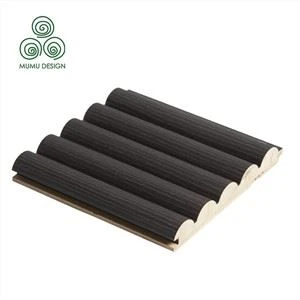
If you’re gearing up for a project, whether big or small, and you want to grab MDF wall panels that fit these standard sizes (or need custom cuts), feel free to reach out to our team. We’ve got options for every budget and project, and we make sure our panels are high-quality, no warping or weird grain issues. Don’t waste time messing with non-standard sizes that’ll cost you more—stick to the standards, and you’ll have a smooth installation.
Exterior Shou Sugi Ban References
- American Wood Council. (2022). MDF Panel Standards for Interior Construction.
- European Panel Federation. (2023). Standard Sizes for Medium-Density Fiberboard Products.
- National Association of Home Builders. (2021). Interior Wall Paneling: Sizing and Installation Guidelines.
- Composite Panel Association. (2022. MDF Thickness and Dimension Specifications for Residential Applications.
Dongguan MUMU Woodwork Co., Ltd.
Dongguan MUMU Woodwork Co., Ltd. is one of the most professional mdf wall panel manufacturers and suppliers in China, featured by cheap products and good service. If you’re going to wholesale customized mdf wall panel at low price, welcome to get quotation and free sample from our factory. Contact us for more discount information.
Address: Room No.2602, Universal Commerce Center,Dongguan, China 523073
E-mail: export@mumu-ing.com
WebSite: https://www.mumu-ing.com/
