Hey there, if you’re deep in the low-voltage electrical game, chances are you’ve heard of busbars—those sleek metal strips that move power around panels, switchgear, and distribution systems without all the tangled, inefficient wires. But here’s the thing I run into every day as a busbar accessories supplier: a ton of folks I talk to still think busbars work as standalone pieces. They’re missing out on game-changing parts that make low-voltage setups way safer, faster to install, and way less likely to mess up down the line. Let’s break down the real, hardworking busbar accessories that actually matter for low-voltage systems—no jargon overload, just the straight stuff. Busbar Accessories
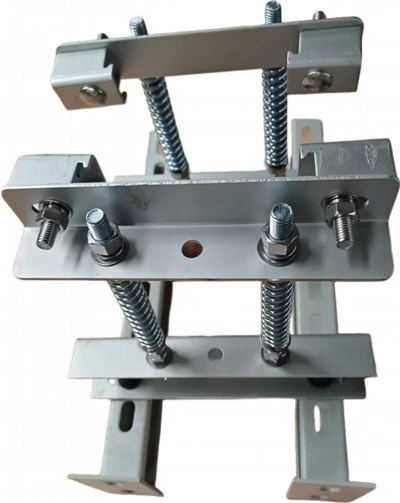
First, let’s set the scene: low-voltage systems (usually under 1,000V AC or 1,500V DC) are everywhere—from office building switchboards to residential distribution panels to small manufacturing equipment. Busbars take center stage here because they handle high current loads efficiently, but they’re only as good as the bits that hold them, protect them, and connect them. I’ve seen so many installers cut corners on accessories just to save a few bucks, only to end up back on site fixing a loose connection or a short that could’ve been avoided. Let’s start with the stuff that keeps busbars where they need to be: busbar supports and insulators. These aren’t afterthoughts, y’all. For low-voltage busbars that are usually 10mm to 50mm thick, you need insulators rated for the exact voltage and environment. Like, if you’re working in a damp warehouse, generic plastic insulators won’t cut—you need ones made of polyester or epoxy that resist moisture and UV (if it’s an outdoor setup). Supports also have to be spaced right; too far apart and the busbar flexes when current runs through it (that thermal expansion thing, by the way—busbars get hot, so they move), which can crack insulators or loosen connections. I once had an electrician tell me he skipped extra supports on a 200A busbar run and ended up with a gap that tripped the whole panel when the busbar shifted during a summer heatwave. Oops.
Next up, busbar connectors and terminal lugs. This is where most of the headaches happen. Low-voltage systems rely on tight, corrosion-free connections to stop voltage drops and overheating. The wrong lug or connector can create what’s called a “high-resistance joint,” which basically turns your power-carrying metal into a tiny space heater—bad news if it’s inside a panel with flammable insulation or wires. There are different types for different jobs: bolted connectors for permanent, high-load setups (like a main distribution busbar feeding multiple branch circuits), and crimped lugs for smaller busbars or temporary connections. Wait, and don’t forget about torque rings or torque-controlled wrenches—even the best connector is useless if you over-tighten it (you’ll crack the busbar or insulator) or under-tighten it (loose connection, again). I always tell installers: match the lug size to the busbar cross-sectional area, not just the wire size. Too small and it won’t make full contact, too big and it won’t fit tight.
Then there’s busbar covers and enclosures. Safety first, right? Low-voltage panels have live busbars inside, so you can’t just leave them exposed. Busbar covers are usually made of non-conductive plastic or metal (if it’s grounded) that slips over the busbar run, blocking accidental contact from tools, wiring, or even curious workers. For areas where dust or debris is a problem—like a woodworking shop or construction site—you need sealed covers to keep gunk out, which could cause a short. I recently worked with a client who installed exposed busbars in a small factory, skipped covers, and within a month, metal shavings from their milling machine settled on the busbar and caused a phase-to-phase short. That shut down production for two days and cost them way more than the covers would’ve. Covers also help with thermal management? Wait, some are vented, so they let heat escape while still protecting the busbar—perfect for systems that run heavy loads all day.
Wait, what about busbar reducers and adaptors? Ever need to connect a 400A busbar to a 200A circuit? A straight cut won’t work. Reducers are those little (or not-so-little) adaptors that bridge different busbar sizes without losing current capacity. They come in straight or elbow styles, depending on if you’re connecting a horizontal bus to a vertical branch. I’ve seen installers try to file down a big busbar to fit a smaller connection—big mistake. That creates a thinner spot that overheats and eventually breaks. Reducers are designed to maintain the full cross-sectional area of the busbar, so current flows evenly, no hot spots. They’re also coated or treated to resist corrosion, which is key for outdoor or high-humidity setups.
Oh, and let’s not sleep on busbar spacers and phase barriers. Phase barriers are non-conductive strips that go between adjacent busbars to prevent phase-to-phase arcing. Even in low-voltage systems, a tiny spark between two busbars can cause a huge fault, especially if there’s dust or moisture. Spacers keep the busbars aligned and the correct distance apart (voltage rating determines that distance—higher voltage needs more space, even in low-voltage ranges). For multi-pole busbar systems (like 3-phase power for commercial buildings), phase barriers are non-negotiable. I once had a project where the installer forgot to add phase barriers to a 600A 3-phase busbar setup, and when a maintenance worker dropped a screwdriver into the panel, it shorted two phases. The phase barriers would’ve stopped that dead.
Wait, is there anything I’m missing here? Oh, busbar marking kits! You’d be surprised how many low-voltage panels get miswired because the busbars aren’t labeled. Marking kits—usually vinyl or metal stickers, or molded marks—let you label each phase (L1, L2, L3), neutral, and ground on the busbars. That makes troubleshooting so much faster. No more tracing wires for hours because you can’t tell which bus is which. I always recommend permanent metal marking for heavy-use panels (like industrial switchboards) because vinyl can peel off with heat over time.
Let’s talk about why these accessories matter more now than ever. Low-voltage systems are getting bigger—think data centers with thousands of servers, EV charging stations, and solar panel setups that feed power into the grid. Those systems need busbars that can handle high currents (up to 1,000A or more) safely, and accessories are the safety net. If you cut corners here, you’re not just risking a service call—you’re risking downtime, fire hazards, or even injury. I’ve had customers come to me after a code inspection failed because they used generic insulators instead of rated ones for their low-voltage setup. Local electrical codes (like NEC in the US, IEC in Europe) actually require specific accessories for busbar systems, so skipping them isn’t just bad practice—it’s against the rules.
Wait, a common misconception I hear: “I can use wire accessories for busbars.” No way. Busbars have a larger contact surface and handle higher current, so wire lugs or connectors won’t make a full connection. That leads to higher resistance, which as I mentioned before, leads to overheating. Busbar-specific accessories are engineered to fit the unique shape and size of busbars, so they create a tight, uniform contact that transfers current efficiently. I’ve tested this myself: a generic wire connector on a 50mm x 10mm busbar had a 3x higher voltage drop than a proper busbar bolted connector. That’s wasted energy, which translates to higher electricity bills for the end user—not to mention the fire risk.
Another thing I see: people buying cheap, no-name accessories online to save money. Don’t do that. Busbar accessories need to be rated for the exact low-voltage system, and they need to be made of materials that resist corrosion, heat, and mechanical stress. A $2 insulator might save you a few bucks, but if it cracks in a year and causes a short, that’s thousands in damage. I only work with manufacturers that test every accessory for thermal stability, dielectric strength (that’s the ability to insulate against voltage), and mechanical load. So when I sell you a busbar support, it’s rated for your exact current and voltage, no surprises.
Let’s wrap this up. Busbars are the backbone of low-voltage power distribution, but they’re not a set-it-and-forget-it part. The right accessories turn a basic busbar run into a safe, efficient, code-compliant system that lasts for years. We’re talking supports, insulators, connectors, lugs, covers, phase barriers, reducers, marking kits—all the little bits that add up to big results.
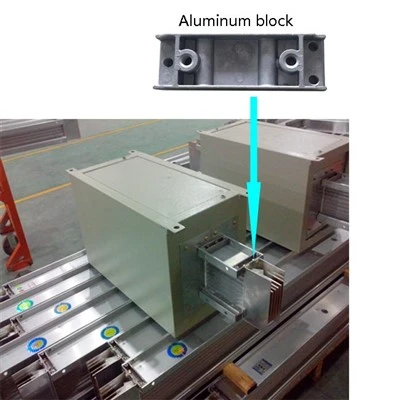
If you’re working on a low-voltage project and need to make sure your busbar setup is solid, or if you’re tired of dealing with faulty accessories that cause headaches, hit me up. We can chat about your exact system specs, what you need, and how to make sure it’s safe and efficient. No pressure, just straight talk from someone who’s been in the busbar accessories game long enough to know what works and what doesn’t. Don’t leave your low-voltage system hanging—get the right accessories, and avoid the costly (and dangerous) mistakes I’ve seen too many times.
Switchgear Auxiliary Equipment References:
- National Electrical Code (NEC), Article 366: Busways, 2023 Edition
- IEC 60439-1: Low-voltage switchgear and controlgear assemblies, Part 1, 2019 Edition
- Electrical Construction & Maintenance (EC&M) Magazine: "Busbar Accessories: Critical for Safety and Efficiency," Vol. 48, No. 7, 2022
Suzhou Kiande Electric Co., Ltd.
Suzhou Kiande Electric Co., Ltd. is one of the most professional busbar accessories manufacturers and suppliers in China, also supports custom service and OEM&ODM service. Welcome to buy durable busbar accessories made in China here and get quotation from our factory. Quality products and reasonable price are available.
Address: No.123, Suzhou Avenue East, Suzhou Industrial Park Suzhou, Jiangsu 215000 China
E-mail: saleswmkc@kiande.cn
WebSite: https://www.busbarcncmachine.com/
