If you’re a pharma packager, med device maker, or anyone handling sterile, regulated meds, you know blister packs are non-negotiable for safety, traceability, and shelf life. But slap a barcode on a blister the wrong way, or have a printer that craps out mid-run, and you’re looking at scrap, compliance fines, or worse—recalls. That’s why a standard blister machine just won’t cut it anymore. You need one with a barcode printing system built in, not some clunky add-on that slows you down or breaks. Let’s break down the actual, no-BS characteristics that separate a solid machine from a headache, from someone who’s been supplying these bad boys for years. Medical Blister Packaging Machine

First off, let’s get one thing straight: it’s not just “does it print barcodes.” The barcode system has to be integrated, not an afterthought. A lot of cheap machines on the market tack on a third-party printer that’s wired to the machine’s PLC like a kid holding a string to a balloon—works, but only if you never move it, never change your blister size, never run a batch with 3 different lot numbers. A properly integrated system doesn’t add extra steps; it’s synced to every part of your packaging line. For example, if your blister feed slows down because of a tricky pill shape, the printer adjusts its speed automatically. If the machine detects a misformed blister, it pauses the printer before that bad blister moves to the sealer, so you don’t waste ink or label material on a pack that’s going straight to scrap. That sync also means no manual alignment, which cuts human error—huge, because FDA and MHRA don’t mess around with hand-placed barcodes that are off-center.
Next, it’s got to handle healthcare-specific barcodes, not the grocery store kind. You’re not scanning UPCs here; you need GS1 DataMatrix codes, serial numbers, lot numbers, expiration dates—all that 2D barcode stuff that’s required for drug traceability, especially with the Drug Supply Chain Security Act (DSCSA) and EU Falsified Medicines Directive (FMD). A lot of general-purpose printers can’t handle 2D barcodes with the high data density med needs, so you end up with codes that scan 50% of the time, if that. The good ones have built-in encoders that are pre-calibrated for GS1 standards, so you don’t have to mess around with software settings that can mess up compliance. I’ve seen guys skip that calibration and get a warning letter from the FDA because their barcodes weren’t readable at the distribution center—total avoidable mess.
Then there’s the durability and consistency of the print itself. Med blisters are usually made of PVC, cold-form foil, or a mix of both—materials that can be slippery or have a coating that repels ink. A barcode system that uses a cheap thermal print head will start smudging after a few batches, especially if you’re running high-volume (like 10,000 packs an hour) shifts. The ones we supply use industrial-grade thermal transfer print heads—they don’t smudge, they adhere to foil and coated plastic, and they last 2x longer than standard heads. Also, no one has time to change a print head mid-batch. A good system lets you swap out the print head in 2 minutes, no tools, so you don’t have to shut down a 2-hour batch just for a part swap.
Wait, let’s talk about the software side, because that’s where most suppliers cut corners. You don’t want a barcode system that’s tied to only one blister machine model, or requires a $10k annual subscription to update lot numbers. The best ones have modular software that works with your existing ERP or batch management system. So if your warehouse runs a SAP or Oracle system, you can just pull batch data directly, no manual typing that leads to typos (another compliance nightmare). Also, the system should have a built-in verification step—like, after it prints the barcode, it scans it right away to make sure it’s scannable, correct, and matches the blister’s product. If it’s not, the machine rejects the blister automatically, no human intervention. That’s not a “nice-to-have”—that’s a must. I once had a customer who skipped the verification step, ran a batch, and ended up with 2,000 packs where the lot number was off. They had to recall the entire batch, which cost them way more than upgrading to a verified system would’ve.
Another underrated feature: flexibility for variable data. You might run a batch of 5,000 generic pills, then switch to a specialty med with a different serial number format, then a vaccine with a QR code for patient instructions. A lot of machines can’t handle that quick switch—they need to reconfigure the entire printer setup, which takes 30 minutes. The good ones let you save batch profiles with a click. So if you want to switch from a 10mm DataMatrix to a 15mm QR code, you just pull up the profile for that product, and the printer adjusts its settings, the print head height, and even the blister feed alignment automatically. That’s a game-changer for small to mid-sized packagers who run multiple product lines, not just one big batch all day.
Don’t sleep on compliance documentation either. This isn’t like a office printer where you just print a receipt. The barcode system has to generate audit trails—every time a barcode is printed, verified, rejected, or adjusted, it logs the date, time, operator, and batch number. That’s required for FDA and EU audits. A lot of cheap systems don’t have that; you have to manually log everything, which is a huge risk when auditors come in. The ones we supply store those audit trails on a secure, password-protected server, and you can export them as a CSV or PDF directly for audits. No more digging through old shift logs or lying if a barcode error happened.
Also, let’s be real: support matters. If your barcode printer breaks at 2 a.m. during a critical batch, you don’t want to wait 3 days for a technician. The integrated systems we provide have on-board diagnostics—they can send an alert to our support team before the print head even fails, so we can send a replacement part in 24 hours, or walk you through a quick fix over the phone. A lot of suppliers sell the machine and then ghost you, making you pay for expensive service calls just to fix a barcode issue. We don’t do that—our support is built into the system, and we train your operators to fix small issues (like a misaligned ribbon) in 2 minutes, no extra cost.
Wait, let’s address a common myth: higher resolution is always better. No, not for blister barcodes. The sweet spot is 300 dpi—enough for 2D barcodes to be scannable by every standard warehouse scanner, but not so high that it wastes ink or slows down the printer. A lot of companies go for 600 dpi because it sounds fancy, but it just adds unnecessary cost and doesn’t improve scan rates. The best systems are calibrated to that 300 dpi sweet spot for med use, so you don’t have to deal with slow print speeds or expensive ink ribbons.
Another thing: resistance to the med environment. Blister packaging areas are sterile, so dust, humidity, and occasional cleaning with sanitizers are par for the course. A consumer printer won’t last in that environment—its internal parts aren’t sealed against dust or moisture. The integrated barcode systems on good machines have IP65-rated enclosures, so they can handle being wiped down with sanitizer, no risk of electrical issues. We had a customer in a hospital pharmacy who tried a standard printer, and it died in 3 months because of all the sterile cleaning—switched to our system, and it’s still going strong after 2 years.
Let’s wrap this up: if you’re shopping for a blister machine with a barcode system, don’t just look at the price tag. Check if it’s integrated (not add-on), if it handles GS1 2D barcodes, if it has built-in verification, if the software works with your existing systems, and if the support is actually there. Skip the cheap models that cut corners on compliance or durability—they’ll end up costing you way more in recalls, fines, and downtime.
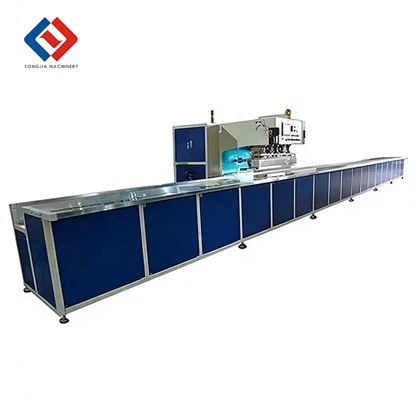
If you’re tired of dealing with barcode systems that cause more problems than they solve, reach out to us to talk through your specific packaging needs. We can help you pick a system that fits your line, your products, and your compliance requirements, no fluff, no hidden fees.
HF Welding Machine References
- U.S. Food and Drug Administration. (2023). Guideline for Barcode Standards for Medical Products and Devices.
- European Medicines Agency. (2022). Falsified Medicines Directive (FMD) Technical Guidelines for Traceability Systems.
- International Organization for Standardization. (2021). ISO/IEC 15415:2021, Information technology — Automatic identification and data capture techniques — Bar code print quality test specification for two-dimensional bar codes.
- Pharmaceutical Engineering Society. (2020). Best Practices for Integrated Barcode Systems in Blister Packaging Lines.
- Drug Enforcement Administration. (2023). DSCSA Requirements for Serialization and Barcode Verification in Prescription Drug Packaging.
Dongguan Yongjia Machinery Equipment Co., Ltd.
We are one of the most reliable medical blister packaging machine manufacturers and suppliers in China, specialized in providing high quality customized service. Please feel free to wholesale advanced medical blister packaging machine at low price from our factory. For quotation, contact us now.
Address: No. 240, Chashan South Road, Chashan Town, Dongguan City, Guangdong Province, China
E-mail: info@yjwelding.com
WebSite: https://www.yjhighfrequencymachine.com/
